Micro-Investing Apps for Renters: Acorns, Stash, and Robinhood Compared
Micro-investing apps let you start with small amounts, sometimes spare change, which lowers the barrier to getting started. The best one depends on your goals and how hands-on you want to be.
How Micro-Investing Apps Lower the Barrier
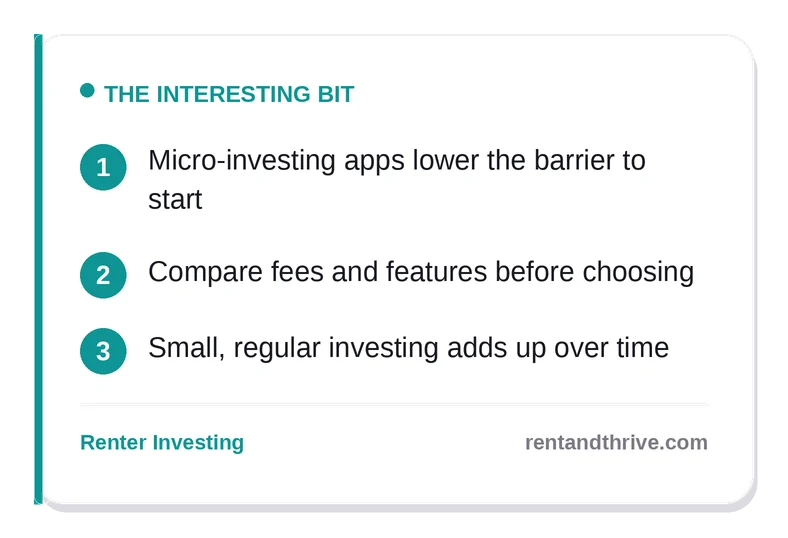
These apps make investing approachable by allowing tiny contributions, automating round-ups or recurring deposits, and simplifying the process into a few taps. For renters who feel they cannot invest because they lack a lump sum, that low entry point can turn intention into action and build the habit of investing regularly.
The trade-off to watch is cost relative to your balance. A flat monthly fee that feels small can be large in percentage terms on a tiny account, so understanding the fee structure matters more the smaller you start.
Picking a Micro-Investing App for Your Style
Micro-investing apps lower the barrier to entry by letting you start with spare change or a few dollars, ideal for renters who want to begin before they feel ready for larger sums. They differ in approach, though, so the right one depends on how hands-on you want to be. Some round up your everyday purchases and invest the difference automatically, turning passive habits into a growing balance. Others let you buy fractional shares of stocks and funds directly, giving you more control.
Before committing, weigh the fees against your balance, because a flat monthly fee that feels trivial can quietly eat a large percentage of a small account, undercutting your returns early on. Look at what each app actually invests in, diversified funds are generally safer for beginners than picking individual stocks, and check for useful extras like retirement accounts or educational tools. The real value of these apps isn’t the spare change itself; it’s building the habit and comfort of investing. Once that’s established and your contributions grow, you can graduate to a low-cost brokerage if the app’s fees no longer make sense for your larger balance.
Picking an App for Your Style
Different apps suit different investors. Some emphasize automated, hands-off investing with pre-built portfolios, which fits people who want to set it and forget it, while others offer self-directed trading for those who want more control. Matching the app to whether you prefer guidance or autonomy is the main decision.
Beyond style, compare fees, available account types, and educational features, and remember that all investing carries risk regardless of how friendly the interface is. A micro-investing app is best seen as a low-friction on-ramp to good habits; as your balance grows, it is worth periodically checking that the costs and features still serve you.
Watching Fees as Your Balance Grows
Micro-investing apps shine as a low-friction way to start, but their cost structure deserves attention as your balance grows. A flat monthly fee that is trivial on a large account can be a significant percentage on a tiny one, so it is worth periodically checking that what you pay still makes sense relative to what you have invested.
If an app’s fees begin to outweigh its convenience, moving to a lower-cost option is reasonable once you have built the habit. The app’s real value is getting you started; staying mindful of costs ensures it keeps serving you as your investing matures.
Understanding How Round-Ups and Auto-Deposits Work
Micro-investing apps lower the barrier to entry by allowing tiny contributions, often automating round-ups on purchases or small recurring deposits. Rounding up a coffee purchase to the nearest dollar and investing the difference, or setting a small weekly transfer, turns spare amounts into invested money without much thought. For renters who feel they lack a lump sum to start, this can turn intention into action.
The appeal is building the habit of investing regularly, which matters more than the size of any single contribution. Automating the process means the investing happens steadily in the background rather than depending on willpower each time.
Watching Fees Relative to Your Balance
The main trade-off to watch with micro-investing apps is cost relative to your balance. A flat monthly fee that feels trivial can be large in percentage terms on a very small account, so understanding the fee structure matters more the smaller you start. Reading how the app charges, flat fee, percentage, or otherwise, helps you judge whether it is worthwhile at your balance.
If an app’s fees begin to outweigh its convenience as your balance grows, moving to a lower-cost option is reasonable once the habit is established. The app’s real value is getting you started, so staying mindful of costs keeps it serving you over time.
Choosing an App That Fits Your Style
Different apps suit different investors, so matching the tool to how hands-on you want to be is the main decision. Some emphasize automated, hands-off investing with pre-built portfolios, which fits people who want to set it and forget it, while others offer self-directed trading for those who want more control. Neither is universally better; it depends on your preferences.
Beyond style, comparing account types, features, and educational tools helps, and remembering that all investing carries risk regardless of a friendly interface keeps expectations grounded. A micro-investing app is best seen as a low-friction on-ramp to good habits rather than a shortcut to guaranteed returns.
Using the App as a Starting Point
Micro-investing apps are best understood as an on-ramp, a low-friction way to build the habit of investing rather than a complete long-term strategy. Their value is getting you started with small, automated contributions, which is often the hardest step for renters who feel they lack a lump sum. Once the habit is established, the app has largely done its job.
As your balance grows, periodically checking that the fees still make sense, and considering lower-cost options if they do not, keeps the tool serving you. Because all investing carries risk, the app is a convenient beginning, not a guarantee, and a long-term view remains essential.
Frequently Asked Questions
What are micro-investing apps?
Apps that let you start investing with small amounts.
How do I choose one?
Compare fees and features rather than picking by name.
Do small amounts matter?
Small, regular investing can add up over time.
Related reading
- Emergency Fund vs. Investing: Which Should Renters Prioritize?
- Renters Insurance Explained: What It Covers and How Much You Actually Need
- REITs: How Renters Can Invest in Real Estate Without Buying Property
- HSA as an Investment Account: The Triple Tax Advantage Renters Ignore