Subletting Your Apartment: Rules, Risks, and How to Do It Right
Subletting lets you hand your space to someone else temporarily while you remain on the lease. Done correctly it can cover your rent during a gap; done carelessly it can violate your lease and leave you holding the bill.
The Rules and Risks of Subletting
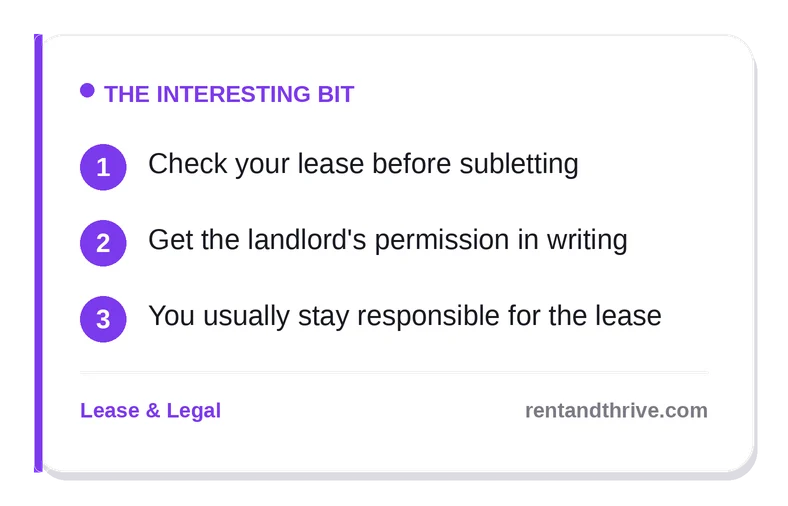
The first thing to confirm is whether your lease permits subletting at all, since many require the landlord’s written consent and some prohibit it outright. Subletting without permission can be a lease violation with serious consequences. Where it is allowed, you typically remain responsible to the landlord for the rent and any damage, which means the subtenant’s behavior becomes your financial risk.
That continuing responsibility is the central risk. If the subtenant fails to pay or damages the unit, the landlord generally looks to you, so the arrangement is only as safe as the person you choose and the agreement you put in place.
Subletting the Right Way, Step by Step
Subletting lets you keep your lease while someone else lives in and pays for your space, useful during a long trip, a temporary relocation, or a gap before your lease ends. Done carelessly, though, it can violate your lease and leave you on the hook, so the first move is always to read your agreement and confirm whether subletting is even allowed.
If it is, get the landlord’s written permission before anyone moves in; verbal approval evaporates the moment there’s a dispute. Screen your subtenant as a landlord would, checking income and references, because you remain legally responsible for the rent and any damage they cause. Put the arrangement in a written sublease that states the rent, dates, deposit, and house rules, and document the unit’s condition with photos before they arrive. Collect a deposit to cover potential damage. The cardinal rule is that subletting doesn’t transfer your obligations, it adds a person between you and the landlord, so the original lease still binds you. Handle it formally and you get flexibility; handle it casually and you inherit someone else’s mistakes.
Protecting Yourself While You Remain on the Lease
Since subletting usually leaves you responsible to the landlord, protecting yourself is essential. Collecting a deposit from the subtenant where appropriate, documenting the unit’s condition before they move in, and putting clear terms in a written sublease give you recourse if something goes wrong. The subtenant’s reliability becomes your financial risk, so screening carefully matters.
Keeping the landlord informed and ensuring you have written approval avoids turning a helpful arrangement into a lease violation. Because subletting rules and protections vary by location, reviewing your lease and local law before proceeding keeps the whole arrangement on solid footing.
When Subletting May Not Be the Best Option
Subletting is not always the right answer, and it is worth weighing against alternatives. If your lease prohibits it or your landlord will not consent, pursuing it anyway risks a lease violation, so options like a lease assignment, a negotiated early termination, or a direct replacement tenant approved by the landlord may serve you better.
Because you typically remain financially responsible during a sublet, the arrangement only makes sense when you trust the subtenant and have a solid written agreement. Considering the alternatives first ensures you choose the approach that actually fits your situation and your lease.
Confirming Your Lease Allows Subletting
The first thing to check before subletting is whether your lease permits it, since many require the landlord’s written consent and some prohibit it outright. Subletting without permission can be a lease violation with serious consequences, so getting explicit written approval is the essential starting point. Skipping this step puts your own tenancy at risk.
Where it is allowed, understanding any conditions the landlord attaches, such as approval of the subtenant, keeps the arrangement compliant. Reviewing your lease and discussing the plan transparently with your landlord sets the whole sublet on solid footing.
Remembering You Stay Responsible
In a typical sublet, you remain responsible to the landlord for the rent and any damage, which means the subtenant’s behavior becomes your financial risk. If they fail to pay or damage the unit, the landlord generally looks to you, so the arrangement is only as safe as the person you choose. This continuing responsibility is the central risk to weigh.
That is why screening the subtenant carefully, much as a landlord would, and collecting a deposit where appropriate, matters so much. Documenting the unit’s condition before they move in further limits your exposure if something goes wrong.
Considering Alternatives Like Assignment
Subletting is not always the best route, so it is worth weighing against alternatives. If your lease prohibits it or your landlord will not consent, options like a lease assignment, where another tenant takes over your lease entirely, or a negotiated early termination may serve you better. Each shifts responsibility differently, so the right choice depends on your situation and your lease.
Because rules and tenant protections around subletting and assignment vary by location, reviewing your lease and local law before proceeding is wise. Choosing the approach that genuinely fits, rather than defaulting to a sublet, can save you both money and risk.
Putting the Sublet Terms in Writing
A clean sublet rests on a clear written agreement between you and the subtenant, covering rent, dates, the deposit, and responsibilities. Because you typically remain liable to the landlord, this written sublease gives you recourse if the subtenant fails to pay or causes damage, turning a handshake arrangement into something enforceable. Vague verbal terms are where sublets most often go wrong.
Documenting the unit’s condition before the subtenant moves in, with dated photos, further protects you at the end of the arrangement. Combined with written landlord approval, these records keep a helpful arrangement from becoming a costly one.
Frequently Asked Questions
Can I sublet my apartment?
Only if your lease allows it and you get the landlord’s written permission.
Am I still responsible?
Usually yes, you remain responsible for the lease.
How do I do it safely?
Get permission in writing and a clear agreement with the subtenant.
Related reading
- How to Negotiate Rent on a New Apartment (Before You Move In)
- Apartment Red Flags to Watch For Before You Sign
- First Apartment Checklist: What You Actually Need to Buy
- How to Pack an Entire Apartment in One Weekend