How to Negotiate Rent on a New Apartment (Before You Move In)
Rent is often more negotiable on a new apartment than renters assume, especially before you sign. A reasonable, well-supported ask can lower your rate or add value you would otherwise pay for.
When New-Lease Rent Is Negotiable
A landlord’s willingness to negotiate depends largely on the market and the unit. A long-vacant apartment, a softer rental market, or the end of a leasing season can all give an owner reason to deal rather than wait for another applicant. A vacant unit earns nothing, so a slightly lower rent from a qualified tenant can beat holding out.
Your own profile matters too. Strong credit, stable income, and a willingness to sign a longer lease make you the kind of low-risk tenant a landlord may be willing to accommodate, which strengthens any request you make.
Negotiating Rent Before You Sign a New Lease
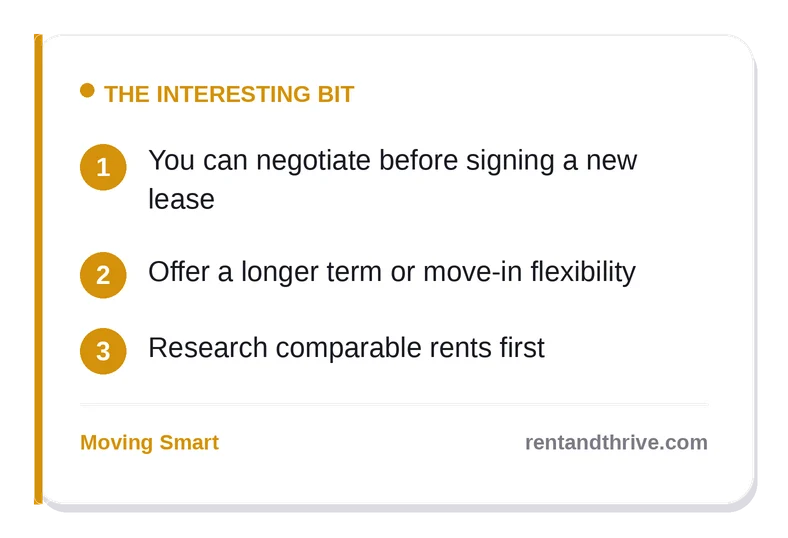
The best time to negotiate rent is before you’ve signed anything, when you still hold the power to walk away. Landlords are often more flexible than their listing suggests, especially on a unit that’s been vacant a while, during slower rental seasons, or when you can show you’re a strong, low-risk tenant. Come prepared with comparable listings nearby priced below the asking rent, your evidence that the number has room to move.
Lead with what makes you attractive: solid income, good references, and a willingness to sign promptly. Then make a specific, reasonable ask rather than a vague plea for a discount. If the landlord won’t lower the headline rent, pivot to other value, a free month, waived application or pet fees, included parking, or minor upgrades before move-in. Offering a longer lease term or flexibility on the move-in date can also unlock a better rate, since both reduce the landlord’s risk and turnover costs. Stay polite and be ready to walk; the worst outcome is the price you were already offered, and renters who simply ask often save more than they expect.
Negotiating Before You Sign
The strongest approach pairs a specific, reasonable request with evidence, comparable rents nearby and your qualifications as a tenant. If the landlord will not move on price, value-based asks often succeed instead: a free month, waived fees, a parking spot, a minor upgrade, or a longer rate lock. These can be worth real money even when the headline rent stays put.
Keeping the tone collaborative and getting any agreement in writing before signing protects you. The worst outcome of a polite, well-prepared ask is usually just a no, so for renters willing to raise the topic, negotiation is a low-risk way to improve the deal.
Putting Any Agreement in Writing
Whatever you negotiate before signing, a lower rent, a free month, waived fees, an upgrade, it only counts if it is in the lease or a written addendum. Verbal promises are hard to enforce, so confirming the agreed terms in writing before you sign protects you if memories later differ. This simple step preserves the value of a successful negotiation.
Reviewing the final document to ensure it reflects exactly what was agreed, and keeping a copy, completes the process. A negotiation is only as good as the paperwork that records it, so do not skip the final confirmation.
Knowing When New-Lease Rent Is Negotiable
Rent on a new apartment is often more negotiable than renters assume, and the conditions matter. A long-vacant unit, a softer rental market, or the end of a leasing season can each give a landlord reason to deal rather than wait for another applicant, since a vacant apartment earns nothing. Recognizing these signals tells you when an ask is most likely to succeed.
Your own profile matters too: strong credit, stable income, and a willingness to sign a longer term make you a low-risk tenant a landlord may accommodate. Reading both the market and your position helps you time and frame the request well.
Pairing a Reasonable Ask With Evidence
The strongest negotiation pairs a specific, reasonable request with evidence. Comparable rents nearby show whether your proposed rate is fair, and your qualifications as a tenant give the landlord a reason to work with you. A precise ask grounded in data is far more persuasive than a vague hope for a lower price.
If the landlord will not move on rent, value-based asks often succeed instead, a free month, waived fees, a parking spot, a minor upgrade, or a longer rate lock. These can be worth real money even when the headline rent stays the same.
Getting the Deal in Writing
Whatever you negotiate before signing, it only counts if it appears in the lease or a written addendum, since verbal promises are hard to enforce. Confirming the agreed terms in writing before you sign protects you if memories later differ, and reviewing the final document ensures it reflects exactly what was agreed. Keeping a copy completes the protection.
Approaching the conversation collaboratively and keeping the tone professional makes a yes more likely, and the worst outcome of a polite, well-prepared ask is usually just a no. For renters willing to raise the topic, negotiation is a low-risk way to improve the deal.
Approaching the Conversation Collaboratively
A rent negotiation on a new apartment lands better when it feels like a collaboration rather than a demand. Framing your request around what works for both sides, a reliable tenant in exchange for a fair rate, makes a landlord more receptive than an ultimatum would. The tone you set often matters as much as the specific ask.
Because the worst likely outcome of a polite, well-prepared request is simply a no, there is little downside to asking. For renters willing to raise the topic respectfully, negotiation is a low-risk way to improve the deal before signing.
Frequently Asked Questions
Can I negotiate rent on a new apartment?
Often yes, before you sign, especially in a soft market.
What is my leverage?
Offering a longer term or a flexible move-in date can help.
How do I prepare?
Research comparable rents so your ask is reasonable.
Related reading
- Apartment Red Flags to Watch For Before You Sign
- The Ultimate Moving Checklist: 8 Weeks Before Move-In Day
- Lease Renewal: How to Negotiate Lower Rent (And Win)
- How to Start Investing When You’re Paying Rent