First Apartment Checklist: What You Actually Need to Buy
A first apartment tempts you to buy everything at once, which is how budgets get blown. Focusing on what you actually need first keeps the early weeks affordable and far less stressful.
Separating True Essentials From Nice-to-Haves
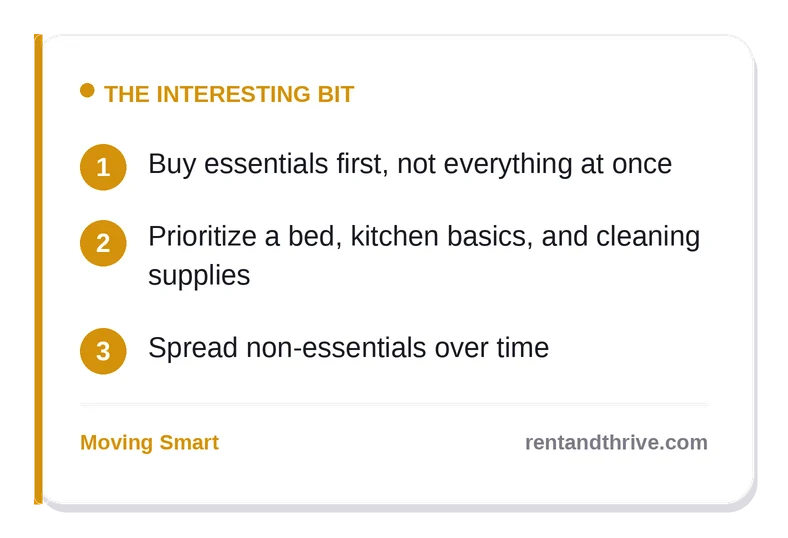
The items you genuinely need from day one are a short list: somewhere to sleep, basic kitchen tools to cook and eat, cleaning supplies, and a few necessities for the bathroom. Almost everything else, matching furniture, decor, gadgets, can wait until you have lived in the space and understand how you actually use it. Buying only the essentials first prevents costly impulse purchases you may not even need.
Living in the apartment for a little while before furnishing it fully also helps you spend on the right things. You learn what the space requires rather than guessing, which avoids the common trap of buying items that do not fit or get used.
Buying First-Apartment Essentials Without Overspending
Furnishing a first apartment tempts you to buy everything at once, which is exactly how people overspend before the first rent check clears. The smarter approach is to separate true essentials from nice-to-haves and buy in that order. The first wave is what makes the place livable, a bed and bedding, basic kitchen items to cook a meal, cleaning supplies, shower curtain and towels, and a few tools, not a fully decorated home.
Everything else can wait and be bought gradually as you learn what you actually need. Spreading non-essentials over the first few months protects your cash buffer and prevents impulse purchases you later regret. Lean on secondhand sources, marketplace listings, thrift stores, and buy-nothing groups, where renters frequently offload perfectly good furniture for free or cheap when they move. Measure your space before buying anything large, since a couch that won’t fit the stairwell is an expensive lesson. Prioritize multipurpose items in a small unit. By buying essentials first and the rest over time, you get a functional home immediately without the debt that often follows a furnishing spree.
Furnishing the First Place Without Overspending
There are many ways to outfit a first apartment affordably: secondhand and marketplace finds, hand-me-downs from family, budget-friendly basics, and waiting for sales on bigger items. Prioritizing function over style early on keeps costs down, and you can upgrade gradually as your budget allows. Multipurpose pieces stretch both money and space in a small unit.
Spreading purchases over the first few months, rather than buying it all in week one, smooths the spending and lets you make better choices. A first apartment does not need to be finished immediately; it needs to be livable, and the rest can come together over time.
Spreading Purchases Over the First Few Months
Furnishing a first apartment does not have to happen all at once, and spreading purchases out usually leads to better choices and smaller bills. Living in the space for a while reveals what you actually need and how you use each room, which prevents buying items that do not fit or go unused. Patience here saves real money.
Prioritizing function over style early, and watching for sales or secondhand finds on bigger pieces, lets the apartment come together gradually as your budget allows. A first place needs to be livable, not finished, and the rest can follow over time.
Separating Day-One Needs From Eventual Wants
A first apartment tempts you to buy everything at once, but separating true day-one needs from eventual wants keeps the early weeks affordable. The genuine essentials are a short list, somewhere to sleep, basic kitchen tools, cleaning supplies, and a few bathroom necessities, while matching furniture, decor, and gadgets can wait. Buying only the essentials first prevents costly impulse purchases.
Living in the space briefly before furnishing it fully also helps you spend on the right things, since you learn how you actually use each room. That patience avoids the common trap of buying items that do not fit or go unused.
Furnishing Affordably Over Time
There are many ways to outfit a first apartment without overspending: secondhand and marketplace finds, hand-me-downs, budget-friendly basics, and waiting for sales on bigger items. Prioritizing function over style early keeps costs down, and you can upgrade gradually as your budget allows. Multipurpose pieces stretch both money and limited space.
Spreading purchases over the first few months, rather than buying everything in week one, smooths the spending and leads to better choices. A first apartment needs to be livable, not finished, and the rest can come together over time.
Avoiding Overspending on Extras
The excitement of a new place can drive spending on extras that seem necessary but are not, decorative items, gadgets, or duplicate tools you already own. Pausing before each purchase to ask whether you truly need it now, or whether it can wait, keeps the budget intact. Many extras feel urgent in the moment and unimportant a month later.
Making a list of genuine needs and sticking to it during those first shopping trips curbs impulse buys. The goal is a functional home you can afford, with room to add the nice-to-haves gradually as you settle in and your budget recovers from the move.
Letting the Apartment Come Together Over Time
A first apartment does not need to be fully furnished on day one, and accepting that keeps the early weeks affordable. Living in the space for a while reveals what you actually need and how you use each room, which leads to smarter purchases than buying everything at once. Patience here prevents the common mistake of acquiring items that do not fit or go unused.
Spreading purchases over the first few months, prioritizing function, and watching for sales or secondhand finds lets the place fill in gradually as your budget recovers from the move. A livable home now, completed over time, beats an overspent one immediately.
Frequently Asked Questions
What do I actually need for a first apartment?
Start with a bed, basic kitchen items, and cleaning supplies.
Do I have to buy everything at once?
No, spread non-essentials over time to ease the budget.
How do I avoid overspending?
Buy essentials first and add the rest as you go.
Related reading
- Renters Insurance Explained: What It Covers and How Much You Actually Need
- How to Invest $100 a Month as a Renter and Actually Build Wealth
- How to Negotiate Rent on a New Apartment (Before You Move In)
- Apartment Red Flags to Watch For Before You Sign