Month-to-Month vs. Annual Lease: Which Is Right for You?
Choosing between a month-to-month and an annual lease is really a choice between flexibility and stability. Neither is universally better; the right one depends on your plans, your budget, and how much certainty you want.
The Trade-Offs of Each Lease Type
An annual lease locks in your rent and your right to stay for the full term, which provides predictability and often a slightly lower rate. The cost is commitment: leaving early generally triggers penalties. A month-to-month arrangement offers the freedom to move with relatively short notice, but usually at a higher price and with the risk that the landlord can change terms or end the tenancy on similar notice.
Seen this way, you are trading price and security against flexibility. Knowing which you value more in your current situation is the heart of the decision.
Month-to-Month vs. Annual: Matching the Lease to Your Life
The choice between a month-to-month and an annual lease is really a trade between flexibility and stability, and the right answer depends on your near-term plans. Month-to-month agreements let you leave with short notice, valuable if a job, relationship, or relocation might shift, but landlords usually price that freedom higher and can also raise the rent or end the arrangement with relatively little warning.
An annual lease locks your rent for the term and gives you the security of knowing the place is yours for a year, which matters in tight markets where finding a replacement is stressful. The cost is commitment: breaking it early can trigger penalties. Think through your next twelve months honestly. If your life is in flux, the premium for month-to-month can be worth it. If you’re settled and want predictable housing costs, the annual lease usually wins on both price and peace of mind. Some renters negotiate a middle path, a shorter fixed term, or an annual lease with a clearly defined early-exit clause spelled out before signing.
Matching the Lease to Your Life
A month-to-month lease tends to suit people in transition, those expecting a job change, a possible relocation, or uncertainty about a neighborhood, where the ability to leave quickly is worth paying for. An annual lease fits renters who are settled and want to protect their rent from increases for a defined period.
Some renters use both over time, starting month-to-month to test a place or a city, then switching to an annual term once they are sure. Because notice requirements and conversion rules vary by lease and location, confirm the specifics in your agreement before counting on either kind of flexibility.
Revisiting the Choice as Your Plans Change
The right lease type is not permanent; it should track your life. A renter who chose month-to-month during a period of uncertainty may switch to an annual term once settled, locking in rent and stability, while someone whose plans suddenly open up might value flexibility more. Revisiting the decision at each renewal keeps it aligned with reality.
Because conversion rules and notice requirements vary by lease and location, confirming the specifics in your agreement before counting on a switch is wise. Treating the lease term as a periodic decision, rather than a default, lets you match it to where you actually are.
Comparing Notice Requirements
One practical difference between lease types is how much notice is required to end or change the arrangement. A month-to-month lease typically requires relatively short notice from either side, which provides flexibility but also means a landlord can change terms or end the tenancy on similar notice. An annual lease locks both parties in for the term, offering stability at the cost of that flexibility.
Knowing the exact notice periods in your agreement, and how they differ between the two structures, helps you avoid surprises. Because these requirements vary by lease and local law, confirming the specifics before you rely on either kind of flexibility is wise.
Weighing Rent Stability Against Flexibility
The core trade-off between the two lease types is predictability versus freedom. An annual lease generally protects your rent from increases for the term and secures your right to stay, which suits renters who are settled, while a month-to-month arrangement lets you move on short notice but often costs more and exposes you to changes. Deciding which you value more is the heart of the choice.
Neither option is universally better; it depends on your plans and tolerance for uncertainty. Renters in transition often pay for flexibility willingly, while those who are settled prefer to lock in stability, and the right answer can change as your circumstances do.
Negotiating the Term That Fits You
Lease length is sometimes negotiable, and it can be a useful bargaining chip. A landlord may offer a lower rate in exchange for a longer commitment, since it reduces their turnover risk, while some renters can negotiate a shorter or more flexible term if they explain their situation. Raising the topic before signing is the time to shape it.
Whatever you agree to, getting the term and any associated concessions in writing protects you. Because conversion rules and renewal terms vary, reviewing how your lease handles the transition between term types ensures the flexibility you negotiated actually holds.
Letting the Decision Track Your Life
The choice between a month-to-month and an annual lease is not permanent, and the right answer can change as your circumstances do. A renter who valued flexibility during a uncertain period might switch to an annual term once settled, locking in rent and stability, while someone whose plans suddenly open up might prefer the freedom to move. Revisiting the decision at each renewal keeps it aligned with reality.
Because conversion rules and notice requirements vary by lease and location, confirming the specifics before relying on a switch is wise. Treating the lease term as a periodic decision rather than a default lets you match it to where you actually are in life.
Frequently Asked Questions
Should I choose month-to-month or an annual lease?
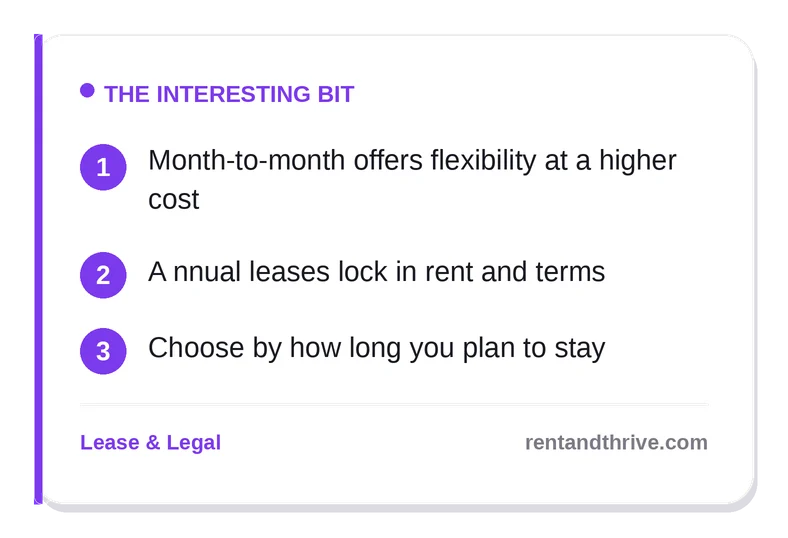
Month-to-month offers flexibility at usually higher cost; annual locks in rent and terms.
Which is cheaper?
Annual leases often have lower rent than month-to-month.
How do I decide?
Base it on how long you plan to stay.
Related reading
- How to Invest $100 a Month as a Renter and Actually Build Wealth
- Subletting Your Apartment: Rules, Risks, and How to Do It Right
- Breaking a Lease Early: Your Options and Legal Rights
- Lease Renewal: How to Negotiate Lower Rent (And Win)