Habitability Standards: What Renters Are Legally Entitled To
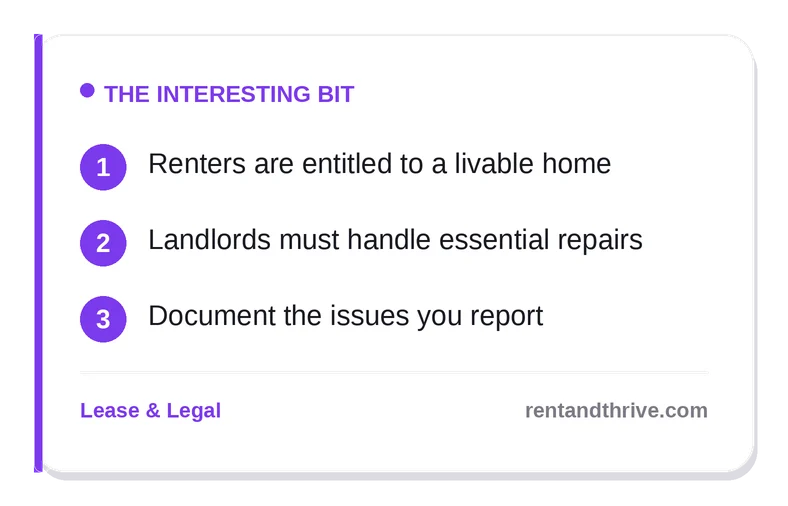
Renters are generally entitled to a home that is safe and livable, a principle often called the implied warranty of habitability. When a landlord stalls on essential repairs, knowing the framework helps you push for a fix the right way.
What Habitability Generally Requires
Habitability standards typically mean the landlord must maintain essential conditions, things like working plumbing, heat, safe electrical systems, structural soundness, and freedom from serious hazards or infestations. Cosmetic flaws usually fall outside this, but conditions that affect health or safety generally fall on the landlord to address. The precise standards and timelines vary by state and city.
Understanding what qualifies as a habitability issue, versus a minor inconvenience, helps you frame a request that a landlord is legally expected to honor, which strengthens your position from the outset.
Enforcing Habitability When a Landlord Stalls
The warranty of habitability, recognized in most jurisdictions, requires landlords to keep rentals fit to live in: working heat, safe plumbing and electrical systems, hot and cold water, structural soundness, and freedom from serious pest infestations. These aren’t favors; they’re baseline legal obligations, and a lease can’t waive them. Knowing this reframes a stalled repair from an inconvenience into a rights issue.
Enforcement, though, depends on doing things in the right order. Report problems in writing and keep copies, since a documented request starts the clock and proves you gave notice. Give the landlord reasonable time to fix it, then escalate using whatever remedies your area allows, which may include repair-and-deduct, rent withholding into an escrow account, or contacting a housing inspector. The crucial caution is to follow your local procedure exactly, because withholding rent incorrectly can expose you to eviction even when the underlying complaint is valid. Photograph conditions, track every communication, and learn your specific state’s rules before acting. Habitability protections are powerful, but they reward renters who document carefully and follow the proper steps.
Keeping Records While You Wait for Repairs
When a landlord is slow to fix a serious problem, thorough records become your most valuable tool. Dated written requests, photos of the condition, and notes on any responses build a timeline that supports whatever step you may need to take next. Many remedies depend on having given proper notice, so the paper trail is not optional.
Because the appropriate response, contacting a housing agency, or pursuing a legal remedy where allowed, depends on your jurisdiction and the severity of the issue, a local tenant resource can help you choose wisely. Acting on solid documentation and accurate local information keeps you on firm ground.
Distinguishing Major Issues From Minor Ones
Habitability protections generally cover conditions that affect health or safety, not cosmetic complaints, so it helps to know which is which before escalating. A broken heater, unsafe wiring, serious leaks, or pest infestations typically qualify, while scuffed paint or a squeaky door usually does not. Framing a request around a genuine habitability issue gives it legal weight.
Focusing your efforts on the problems a landlord is actually obligated to fix keeps your requests credible and effective. For borderline cases, a local tenant resource can help you judge whether an issue rises to the level the law addresses.
Identifying Essential Conditions
Habitability standards generally require a landlord to maintain essential conditions, such as working plumbing, heat, safe electrical systems, structural soundness, and freedom from serious hazards or infestations. Cosmetic flaws usually fall outside this, but problems that affect health or safety typically fall on the landlord to address. The precise standards vary by state and city.
Knowing which problems rise to the level of a habitability issue, versus a minor inconvenience, helps you frame a request a landlord is legally expected to honor. Focusing on genuine essentials strengthens your position from the outset and keeps your requests credible.
Creating a Written Repair Record
When a serious problem needs fixing, a clear written request that describes the issue and asks for a repair within a reasonable time is the reliable first move, and keeping a dated copy matters. Many legal remedies depend on having given the landlord proper notice and an opportunity to fix the problem, so the written record is not optional, it is the foundation. Photos of the condition reinforce the request.
Documenting any response, or the lack of one, builds a timeline that supports whatever step you may need to take next. This paper trail is what turns a complaint into something actionable if the landlord stalls.
Escalating Through the Right Channels
If a landlord still does not act after proper notice, tenants in many areas have options such as contacting a housing or code-enforcement agency, which can inspect and require repairs. In some places, the law specifically allows remedies like repair-and-deduct or rent withholding, but each has strict rules and misusing them can backfire. The appropriate path depends on your jurisdiction and the severity of the issue.
Because these remedies carry risk if applied incorrectly, confirming the proper procedure with a local tenant resource or legal aid organization before acting is strongly advisable. Acting on accurate, location-specific guidance keeps you on firm ground.
Keeping Communication Calm and Documented
When pressing a landlord to address a habitability issue, a calm and documented approach tends to work best. Putting requests in writing, keeping copies, and maintaining a respectful tone create both a record and the kind of cooperative relationship that often gets problems fixed faster. Escalation is always available, but it is rarely the most efficient first move.
If a landlord still does not act after proper notice and a reasonable time, that documented history supports whatever further step is appropriate for your area. Acting on accurate local guidance, with a clear paper trail behind you, keeps you on solid ground throughout.
Frequently Asked Questions
What are renters legally entitled to?
Generally a safe, livable home with essential repairs handled by the landlord.
What if repairs are ignored?
Document the issue and know your local remedies, since rules vary by state.
What counts as essential?
Things like heat, water, and safe conditions, depending on local law.
Related reading
- Renters Insurance Explained: What It Covers and How Much You Actually Need
- Emergency Fund vs. Investing: Which Should Renters Prioritize?
- REITs: How Renters Can Invest in Real Estate Without Buying Property
- HSA as an Investment Account: The Triple Tax Advantage Renters Ignore