What Every Renter Should Read Before Signing a Lease
A lease is a binding contract, and the time to understand it is before you sign, not after a dispute. A careful read protects you from clauses that are easy to skim and costly to ignore.
Reading a Lease Like It Matters
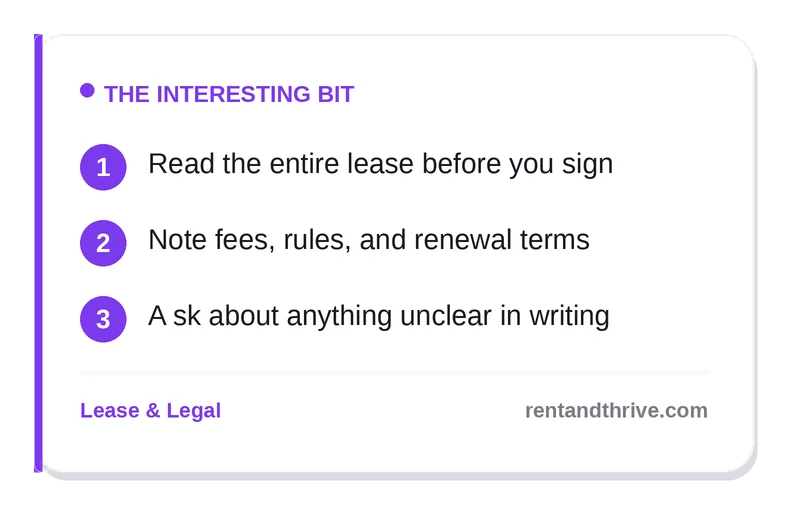
Because a lease governs your housing for its full term, every clause deserves attention even when the language feels routine. Pay particular notice to the rent amount and due date, the length of the term, renewal and termination terms, and any fees, since these define your obligations in concrete ways. If a verbal promise was made, look for it in writing, because what is not in the document is generally hard to enforce.
It is reasonable to ask questions or request changes before signing. Once you sign, you are generally bound by what is on the page, so treating the review as your main window for negotiation is wise.
The Lease Clauses Renters Skim and Later Regret
A lease is a binding contract, and the clauses that cause the most heartbreak are usually the ones renters skim. Before signing, slow down on the fee schedule: late-payment penalties, the grace period, returned-payment charges, and any administrative or amenity fees that aren’t part of base rent. Add them up, because the real cost of a unit often lives in the fine print, not the headline number.
Pay equal attention to the exit terms. Know the notice period required to move out, what triggers automatic renewal, the early-termination penalty, and the exact conditions under which your deposit can be withheld. Look for clauses on guests, subletting, pets, and who handles which repairs, since assumptions here lead to disputes later. If anything is vague, ask for it in writing before you sign, a verbal promise from a leasing agent is worth little if it’s not in the document. Photograph the unit’s condition at move-in and attach it to the lease. Reading carefully once prevents months of avoidable conflict and protects the money on the line.
The Clauses Renters Most Often Regret Skimming
Certain provisions cause the most trouble later: rules on early termination and the penalties involved, who is responsible for repairs and maintenance, restrictions on guests, pets, or subletting, and automatic renewal terms that can lock you in if you miss a notice deadline. Clauses about entry, deposits, and late fees also tend to surprise renters who skipped them.
Because landlord-tenant rules vary widely by state and city, a clause that seems unusual may or may not be enforceable where you live. When something significant is unclear or feels one-sided, consulting a local tenant resource or legal aid organization before signing can save far more than it costs.
Getting Clarity Before You Sign
If any part of a lease is unclear, the time to resolve it is before signing, while you still have leverage. Asking the landlord to explain or put a verbal promise in writing, and requesting changes to terms that concern you, is entirely reasonable. A landlord’s willingness to clarify is itself a useful signal about the tenancy ahead.
For significant or confusing terms, a local tenant resource or legal aid organization can help you understand what a clause really means and whether it is enforceable where you live. A little research up front is far cheaper than discovering a problem after you are bound by the contract.
Understanding the Fees and Penalties Buried in a Lease
Among the easiest clauses to skim are the ones describing fees, and they are often where renters get caught off guard. A lease may specify late fees, returned-payment charges, penalties for early termination, fees for additional occupants or pets, and rules about how and when rent must be paid. Reading these closely before signing tells you the true cost of the tenancy, not just the headline rent.
It is reasonable to ask for clarification or to question a fee that seems steep or unusual, since this is your window to negotiate. Whether a particular penalty is enforceable can depend on local law, so when something looks one-sided, a tenant resource can help you understand it.
Documenting the Unit Before You Move In
A lease review naturally pairs with documenting the unit’s condition, because the move-in is your chance to record any existing flaws. Dated photos or video of scuffs, stains, and wear protect you later from being charged for damage that predated you, which ties directly to getting your deposit back. Many leases include a move-in inspection form, and completing it carefully is worth the effort.
Keeping that record, along with your signed lease and any written communication, creates a file you can rely on if a dispute arises down the road. A little organization at the start often prevents a much larger headache at move-out.
What to Do If You’re Pressured to Sign Quickly
Pressure to sign a lease immediately, before you have read it fully or had questions answered, is itself a reason for caution. A legitimate landlord generally allows reasonable time to review the document, so a hard push to commit on the spot can signal that something in the terms would not survive scrutiny. Taking the time you need is your right as the person bound by the contract.
If you feel rushed, it is fair to ask for a copy to read carefully or to request a short delay. For significant or confusing terms, consulting a local tenant resource or legal aid organization before signing is far cheaper than discovering a problem after you are committed.
Frequently Asked Questions
What should I check before signing a lease?
Read the whole lease, noting fees, rules, renewal terms, and responsibilities.
What if something is unclear?
Ask the landlord to clarify in writing before you sign.
Why does it matter?
The signed lease governs your tenancy, so understand it first.
Related reading
- Tax-Advantaged Accounts Every Renter Should Know About
- How to Invest $100 a Month as a Renter and Actually Build Wealth
- Emergency Fund vs. Investing: Which Should Renters Prioritize?
- Dollar-Cost Averaging: How to Invest Consistently on a Renter’s Budget