
How to Save Money on Rent Without Moving
You do not always have to move to lower your housing cost. A respectful, well-timed conversation with your landlord, backed by a little research, can sometimes shave a real amount off the rent you already pay.
Why Landlords Sometimes Say Yes to Current Tenants
A reliable tenant who pays on time and takes care of the unit has real value to a landlord, because turnover is expensive. Finding, screening, and onboarding a new renter, plus any vacancy between leases, can cost a landlord more than a modest concession to keep someone good in place. Understanding that incentive is the foundation of any rent conversation.
This is why timing matters: the window before a renewal, when the alternative is a possible vacancy, is usually when a landlord is most open to negotiation. Coming in as a low-maintenance, long-term tenant strengthens your position considerably.
Negotiation Scripts That Lower Rent Without Moving
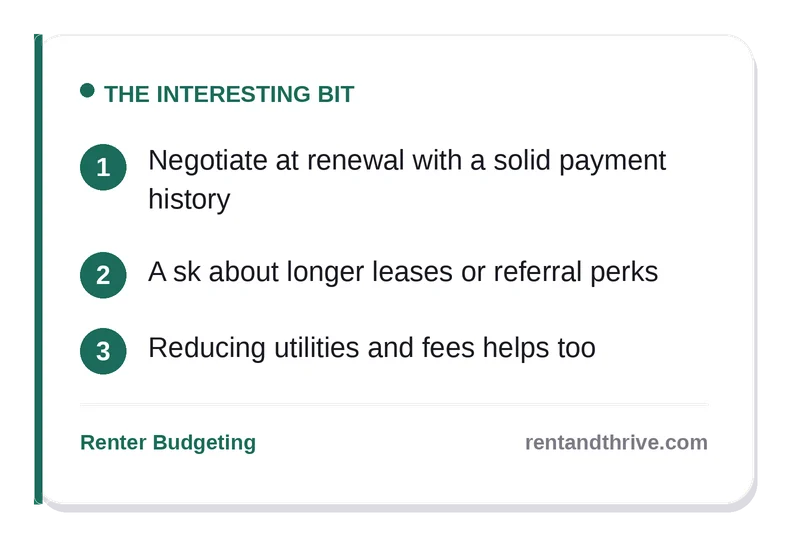
You don’t have to move to pay less. The strongest lever is your record: if you pay on time and keep the unit in good shape, you are cheaper for a landlord to keep than to replace. Vacancy costs them weeks of lost rent plus cleaning and listing fees, so a modest discount to retain a reliable tenant is often the rational choice. Come to the conversation with comparable listings in your building or neighborhood priced below your renewal quote.
Try a script like: I’d love to renew. I’ve been a reliable tenant for two years, and similar units nearby are listing for less. Could we keep my rent flat, or closer to that market rate? If cash is tight for them, ask for value instead, free parking, a waived pet fee, or a longer lease locked at today’s rate. Put any agreement in writing before you sign. Even a flat renewal in a rising market is a real win worth asking for.
Making the Ask Without Damaging the Relationship
Approach the conversation as a request, not a demand, and lead with evidence. Comparable listings in your area, your on-time payment history, and your willingness to sign a longer term all give the landlord a reason to work with you. If a lower rent is a no, consider negotiating for value instead, a longer lease lock, a small upgrade, or waived fees.
Put any agreement in writing before it takes effect, and keep the tone friendly regardless of the answer. Even an unsuccessful ask, handled graciously, preserves the goodwill that makes future requests, and your overall tenancy, smoother.
Other Ways to Lower Housing Costs in Place
If a straight rent reduction is not on the table, there are often other levers that lower your effective housing cost without moving. Asking about a longer lease in exchange for a rate lock, taking on a roommate where permitted, or negotiating to have a fee or utility folded into a flat rent can each ease the monthly burden. Small concessions add up over a year.
It is also worth reviewing what you are paying for separately, parking, storage, amenities, since dropping ones you do not use is a quiet way to cut costs. Combined with a respectful renewal conversation, these adjustments can meaningfully reduce what you spend on staying put.
Researching the Market Before You Ask
A rent conversation lands better when it is grounded in evidence rather than hope, so a little research first pays off. Looking at what comparable units in your area currently rent for tells you whether your request is realistic and gives you something concrete to point to. If similar apartments are listing for less than you pay, that gap is your strongest, most factual argument.
Market conditions matter too: in a softer rental market or during a slower leasing season, landlords are generally more open to keeping a reliable tenant rather than risking a vacancy. Timing your ask to those conditions, and to the window before a renewal, puts the odds more in your favor than a request made at random.
Negotiating for Value Beyond the Rent Number
If a lower monthly rent is not possible, there is often room to negotiate value in other forms, which can be worth real money even when the headline rent holds. A landlord who will not drop the rate might agree to lock it for a longer term, waive a fee, include parking or storage, or handle a minor upgrade. These concessions reduce your effective housing cost without changing the rent itself.
Approaching the conversation collaboratively, and being ready with a specific alternative ask, makes a yes more likely than an open-ended request. Whatever you agree to, getting it in writing before it takes effect protects you and ensures the value you negotiated actually materializes.
Being a Tenant Landlords Want to Keep
The strongest position in any rent conversation is simply being a tenant a landlord does not want to lose. Paying on time, keeping the unit in good shape, communicating clearly, and being easy to work with all build the kind of track record that makes a landlord weigh a concession against the cost and risk of finding someone new. That reputation is earned over the whole tenancy, not in the moment you ask.
When you do raise the topic, a respectful tone and a reasonable request reinforce that value, while an aggressive or entitled approach can sour the relationship you depend on. Even if a particular ask is declined, handling it graciously preserves the goodwill that makes you the tenant a landlord chooses to accommodate next time.
Frequently Asked Questions
Can I lower my rent without moving?
Often yes, by negotiating at renewal with a good payment history.
What else reduces housing costs?
Cutting utilities, dropping unused add-ons, or taking a longer lease for a lower rate.
Does asking really work?
It can, especially if local rents are flat and you are a reliable tenant.
Related reading
- REITs: How Renters Can Invest in Real Estate Without Buying Property
- How to Start Investing When You’re Paying Rent
- Utility Setup Guide: Everything to Arrange Before Moving In
- How to Negotiate Rent on a New Apartment (Before You Move In)