How to Track Your Spending Without Losing Your Mind
Tracking your spending is less about logging every coffee and more about seeing the patterns that quietly drain your account. The goal is a method light enough that you keep doing it past the first enthusiastic week.
Picking a Tracking Method You’ll Actually Maintain
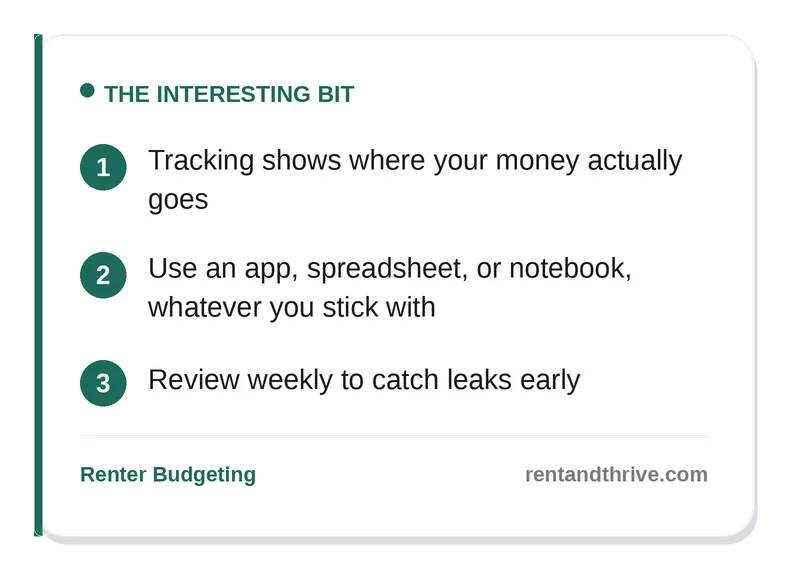
There is no single correct way to track spending, only the way you will keep up with. Some renters do best with an app that automatically imports transactions, while others retain more awareness by jotting purchases in a notes app or a simple spreadsheet. The friction of the method matters more than its sophistication, because a perfect system you abandon tracks nothing.
If you are unsure, try one approach for a single month before judging it. Many people find that the act of recording a purchase, even briefly, creates a small pause that changes the spending itself, which is part of the point.
Choosing a Spending-Tracking Method You'll Actually Keep Up
The best tracking system is the one you don’t quit by week three. If you love detail, a linked app that auto-imports transactions does the heavy lifting and only needs a weekly review. If apps make you anxious about data privacy, a simple notebook or a single spreadsheet column you fill in each night works just as well, because the magic is the noticing, not the software.
Whatever you pick, schedule a recurring fifteen-minute money date, same day each week, to categorize and reconcile. That ritual turns raw data into decisions: you spot the forgotten subscription, the creeping food-delivery habit, the utility that jumped. Renters especially should tag housing-adjacent costs, renter’s insurance, parking, pet rent, laundry, so you see the true cost of where you live, not just the rent line. After a month of consistent tracking, patterns jump out, and that awareness alone tends to cut discretionary spending without any painful budgeting at all.
Turning Tracked Data Into Better Decisions
Raw transaction logs only help once you review them. A short weekly look at where the money went is usually enough to spot the recurring leaks, things like forgotten subscriptions, delivery fees, or convenience purchases that felt small in the moment but add up across a month.
From there, focus on one or two categories rather than trying to fix everything at once. Renters often get the biggest payoff from the flexible categories such as dining out and shopping, since rent and utilities are largely fixed. Tracking is most useful when it feeds a small, specific change you can sustain.
Reviewing Your Numbers Without Burning Out
Tracking only pays off if you occasionally step back and look at the trend, but that review does not need to be exhaustive. A brief monthly glance at totals by category is usually enough to confirm you are on track or spot a category sliding in the wrong direction, without the fatigue that comes from over-analyzing every line.
Setting a regular, low-effort review, paired with a tool that does the tallying for you, keeps the habit sustainable. The aim is steady awareness, not a part-time accounting job, so a method you can maintain beats a meticulous one you quit.
Categorizing Spending So the Numbers Mean Something
Tracking is only useful if your categories are meaningful, and the common mistake is using either too few or too many. A handful of broad buckets, housing, food, transportation, fun, savings, may hide the specific leak you are looking for, while dozens of hyper-specific categories become tedious to maintain and obscure the big picture. A middle ground, with enough detail to spot patterns but few enough to keep up with, usually works best.
It also helps to separate fixed costs from flexible ones, since the flexible categories are where you actually have room to change behavior. Reviewing how money splits between the two clarifies where a budget adjustment will have real effect, rather than spreading effort across expenses you cannot easily move.
Common Tracking Mistakes to Avoid
The biggest tracking pitfall is trying to be perfect, logging every cent with such precision that you burn out within weeks. Consistency matters far more than accuracy to the penny, so a method you keep up loosely beats a meticulous one you abandon. Another frequent mistake is tracking but never reviewing, which turns the effort into busywork that changes nothing.
People also tend to forget irregular and cash spending, which quietly distorts the picture. Building in a quick periodic review, and capturing the occasional cash or annual expense rather than only the obvious recurring ones, keeps your tracking honest enough to actually guide decisions.
Turning Awareness Into Lasting Habits
The real payoff of tracking is not the data but the awareness it builds, which gradually changes spending without constant effort. After a few months of seeing where money actually goes, many people find they pause before discretionary purchases almost automatically, because the habit of accounting for spending has taken root. At that point, tracking can become lighter, since the awareness it created does much of the work.
To keep that awareness from fading, a brief recurring review, even monthly, is usually enough to stay connected to your numbers. The aim is steady mindfulness rather than perpetual logging, so once the habit is established, you can scale back the detail while keeping the benefit.
Letting the Habit Run on Its Own
Once spending tracking has done its job of building awareness, it can become a lighter, almost automatic habit rather than a constant chore. Many people find that after a few months of recording purchases, they naturally pause before discretionary spending, because the habit of accounting for money has taken hold. At that point, a brief periodic review is enough to maintain the benefit.
The aim was never endless logging but the awareness it creates, so scaling back the detail once that awareness is established is a sign the method worked. Keeping a light touch is what makes the habit sustainable over the long run.
Frequently Asked Questions
How do I track my spending?
Use an app, spreadsheet, or notebook, whatever method you will actually keep up with.
How often should I review it?
Weekly reviews catch overspending before it adds up.
Why track at all?
Tracking reveals where your money actually goes, which is the first step to changing it.
Related reading
- REITs: How Renters Can Invest in Real Estate Without Buying Property
- How to Find a Cheap Apartment Without a Broker Fee
- How to Save Money on Rent Without Moving