
Roth IRA vs. Traditional IRA: Which Is Better for Renters?
Roth and traditional IRAs both offer tax advantages for retirement, but they apply the break at different times. Choosing between them is largely a bet on your tax situation now versus later.
The Core Difference Between Roth and Traditional
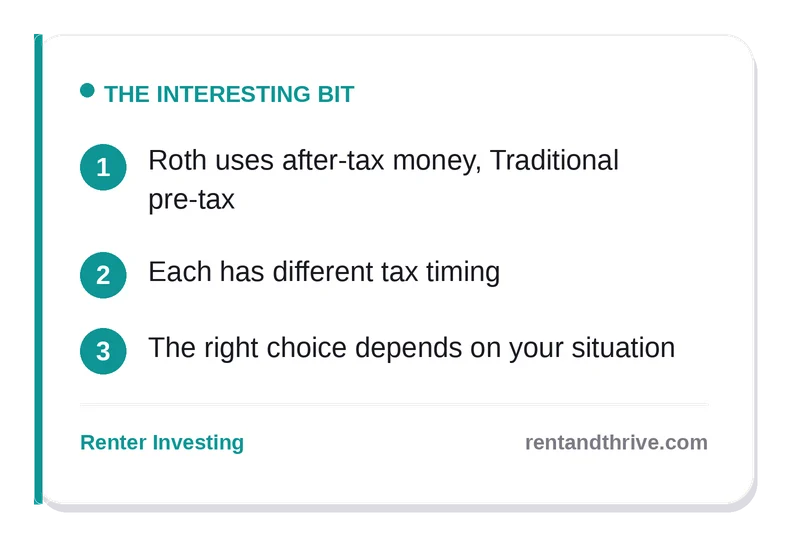
The main distinction is timing of the tax benefit. A traditional IRA may give you a tax deduction on contributions now, with withdrawals taxed in retirement, while a Roth IRA is funded with after-tax money now and offers tax-free qualified withdrawals later. In simple terms, you either take the break today or take it in retirement.
Both share the goal of letting your money grow in a tax-advantaged way, and both have contribution limits and rules set by the IRS. The right choice depends less on the accounts themselves than on what your tax rate looks like across your lifetime.
Roth vs. Traditional IRA: Choosing by Your Tax Timing
The Roth-versus-Traditional IRA choice comes down to when you pay taxes. A Traditional IRA uses pre-tax money, lowering your taxable income now, but you pay tax on withdrawals in retirement. A Roth uses after-tax money, so there’s no deduction today, but qualified withdrawals later are tax-free. Both are powerful retirement tools available to renters and homeowners alike, and the right pick depends on your situation rather than a universal rule.
The usual guideline: if you expect to be in a higher tax bracket later, a Roth’s tax-free withdrawals tend to win, which is why younger renters early in their careers often favor it, paying tax now while their rate is low. If you’re in a high bracket today and expect a lower one in retirement, the Traditional deduction may serve you better. The Roth carries a bonus for renters who value flexibility: you can generally withdraw your contributions, though not the earnings, without penalty, which makes it double as a backstop. When unsure, many people split contributions across both. The most important move is simply opening one and contributing consistently.
Choosing by Your Tax Timing
A common rule of thumb is that a Roth tends to favor those who expect to be in a higher tax bracket later, often younger renters early in their careers, since paying tax now at a lower rate and withdrawing tax-free later can come out ahead. A traditional IRA may appeal more to those who want the deduction now or expect a lower rate in retirement.
Because the decision hinges on future tax rates, which no one knows for certain, some people split contributions or revisit the choice as their income changes. Eligibility and deduction rules also depend on income and workplace plans, so consulting a tax professional or financial advisor can help you apply the general principles to your own numbers.
Revisiting the Choice as Your Income Changes
The Roth-versus-traditional decision is not permanent, and many people adjust it as their careers progress. Someone early on, likely in a lower bracket, may favor a Roth, then reconsider as income and tax circumstances shift. Some split contributions across both to hedge against an uncertain future tax rate.
Because eligibility and deduction rules depend on income and workplace plans, and because future tax rates are unknowable, checking the current rules periodically, and consulting a tax professional for bigger decisions, helps keep your strategy aligned with your situation. The accounts are tools; how you use them can evolve over time.
Matching the Account to Your Tax Outlook
The choice between a Roth and a traditional IRA largely comes down to when you want the tax benefit. A traditional IRA may offer a deduction now with withdrawals taxed in retirement, while a Roth is funded with after-tax money now and offers tax-free qualified withdrawals later. In simple terms, you either take the break today or take it in retirement, depending on where you expect your tax rate to land.
Because the decision hinges on future tax rates, which no one knows for certain, it involves some educated guesswork. Thinking about whether you expect to earn and be taxed more now or later is the practical way to approach the choice.
Why a Roth Often Appeals to Younger Renters
A common rule of thumb is that a Roth tends to favor those who expect to be in a higher tax bracket later, which often describes younger renters early in their careers. Paying tax now at a potentially lower rate and withdrawing tax-free in retirement can come out ahead, and Roth contributions also offer some flexibility that many find reassuring. This is a general guideline, not a guarantee.
A traditional IRA may appeal more to those who want the deduction now or expect a lower rate in retirement. Since the right answer depends on your specifics, the rule of thumb is a starting point rather than a verdict.
Revisiting and Splitting Contributions
The Roth-versus-traditional decision is not permanent, and many people adjust it as their income and tax situation change over a career. Some split contributions across both accounts to hedge against an uncertain future tax rate, which spreads the bet rather than committing entirely to one outcome. Revisiting the choice periodically keeps it aligned with your circumstances.
Because eligibility and deduction rules depend on income and workplace plans, and because tax rules can change, checking the current details matters. For bigger decisions, a tax professional or financial advisor can help you apply these general principles to your own numbers.
Frequently Asked Questions
What is the difference between a Roth and Traditional IRA?
Roth uses after-tax money; Traditional uses pre-tax, so the tax timing differs.
Which is better?
It depends on your situation, so consider your tax picture or ask a professional.
Can renters use an IRA?
Yes, IRAs are available regardless of whether you own a home.
Related reading
- Renters Insurance Explained: What It Covers and How Much You Actually Need
- Emergency Fund vs. Investing: Which Should Renters Prioritize?
- REITs: How Renters Can Invest in Real Estate Without Buying Property
- HSA as an Investment Account: The Triple Tax Advantage Renters Ignore