How to Start Investing When You’re Paying Rent
You do not need to own a home, or wait until you do, to start investing. Renting can actually free up flexibility that makes getting started easier than many people assume.
Getting Started on a Renter’s Budget
A sensible sequence for many is to cover the basics first, a starter emergency fund and any high-interest debt, then begin investing through accessible accounts. Employer retirement plans with a match, individual retirement accounts, and low-cost, broadly diversified index funds are common starting points that do not require large sums or deep expertise.
Automating a small monthly contribution removes the need for willpower and makes investing a habit rather than a decision. Because everyone’s situation differs, and investing always carries risk, it is wise to learn the basics or consult a financial professional, but the core idea is that you can begin with what you have now rather than waiting for a someday that may never feel right.
Why Renters Can Start Investing Sooner Than They Think
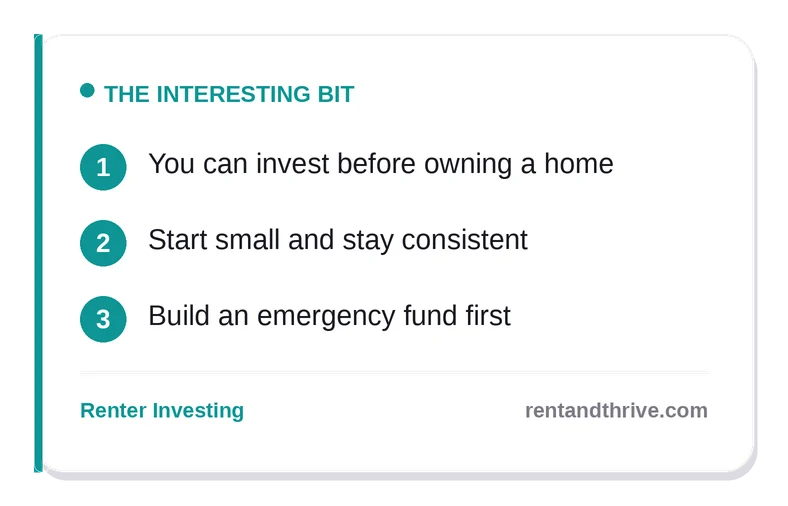
A common myth says you should buy a home before you invest, but renting can actually free you to start sooner. Without a down payment to chase, property taxes to pay, or maintenance to fund, a renter with a plan can put money to work in the market earlier and more flexibly than a homeowner stretched thin by a mortgage. The advantage only materializes, though, if you direct the difference toward investing rather than letting it dissolve into spending.
Begin with the foundation in the right order. Build at least a starter emergency fund first, since you don’t want to sell investments at a loss to cover a surprise, then invest steadily, even small amounts. Start small and stay consistent, because regular contributions and time in the market matter far more than the size of any single deposit. Automate a transfer on payday so investing happens before you can spend the money. The biggest mistake renters make isn’t picking the wrong fund; it’s waiting for a perfect moment that never comes while the most valuable asset, time, slips away.
Building the Habit Before Chasing Returns
For a new investor, establishing the habit of contributing regularly matters more than picking the perfect investment. Automating a modest monthly amount into a diversified, low-cost option turns investing into a default rather than a decision, which is what carries it through busy months and market noise alike. Consistency is the foundation everything else builds on.
Returns are never guaranteed and values rise and fall, so a long-term view and a tolerance for fluctuation are essential. Starting small, staying consistent, and increasing contributions as income grows is a realistic path that does not require timing the market or having a large sum to begin.
Covering the Basics Before You Invest
Investing works best on a stable foundation, so it is worth securing a few basics first. A starter emergency fund and a plan for any high-interest debt protect your investments from being sold at a bad time when a surprise hits. Stability before growth is a sequence that serves renters well.
Once that baseline is in place, even small, automated contributions can begin working over a long horizon. Because everyone’s situation differs and investing carries risk, learning the fundamentals or consulting a financial professional helps, but the order, safety first, then steady investing, is a sound starting point.
Putting Investing on Autopilot
For a new investor, the habit of contributing regularly matters more than picking the perfect investment, and automation is what builds that habit. Setting a modest amount to transfer into a diversified, low-cost option each payday turns investing into a default rather than a monthly decision, which is what carries it through busy stretches and market noise alike. Money invested before you can spend it is rarely missed.
Automating also removes the temptation to time the market, since you invest steadily regardless of headlines. As your income grows, nudging the contribution up keeps your investing scaling with your means without much felt sacrifice.
Keeping a Long-Term Perspective
Investing rewards patience, and a long time horizon is one of a renter’s biggest advantages when starting early. Markets rise and fall, and values can drop in the short term, so the ability to leave contributions invested through the ups and downs is what lets compounding do its work. Reacting to every swing tends to hurt more than help.
Because returns are never guaranteed, a long view and a tolerance for fluctuation are essential rather than optional. Viewing investing as something measured in years and decades, not weeks, keeps short-term volatility from derailing a sound long-term plan.
Learning the Basics or Getting Guidance
You do not need to be an expert to start, but learning a few fundamentals, diversification, costs, and the difference between account types, makes you a more confident investor. Free, reputable educational resources can cover the essentials, and understanding what you own helps you stay the course when markets get bumpy. A little knowledge goes a long way toward avoiding common mistakes.
Because everyone’s situation differs and investing carries risk, consulting a financial professional for bigger decisions is reasonable, especially when balancing investing against debt or other goals. The core idea, though, is that you can begin with what you have now rather than waiting for a someday that never feels right.
Starting With What You Have Now
The most important investing decision for a renter is often simply to begin, with whatever amount is realistic, rather than waiting for a larger sum or for homeownership. Time in the market generally matters more than the amount you start with, so an early, modest start has an advantage that a later, bigger effort struggles to match. Beginning is the step that compounds.
Covering a few basics first, a starter emergency fund and any high-interest debt, sets a stable foundation, after which even small automated contributions can grow over the years. Because investing carries risk, learning the basics or consulting a professional helps, but the core idea is to start with what you have.
Frequently Asked Questions
Can I invest while renting?
Yes, you do not need to own a home to start investing.
What should I do first?
Build an emergency fund before investing.
How do I begin?
Start small and contribute consistently over time.
Related reading
- Emergency Fund vs. Investing: Which Should Renters Prioritize?
- Micro-Investing Apps for Renters: Acorns, Stash, and Robinhood Compared
- How to Negotiate Rent on a New Apartment (Before You Move In)
- Rent Withholding and Repair-and-Deduct: Legal Remedies for Renters