The Ultimate Moving Checklist: 8 Weeks Before Move-In Day
A move goes smoothly when the work is spread out instead of crammed into the final scramble. Turning the standard eight-week countdown into focused weekly tasks keeps the whole thing manageable.
Why a Phased Countdown Beats a Last-Minute Rush
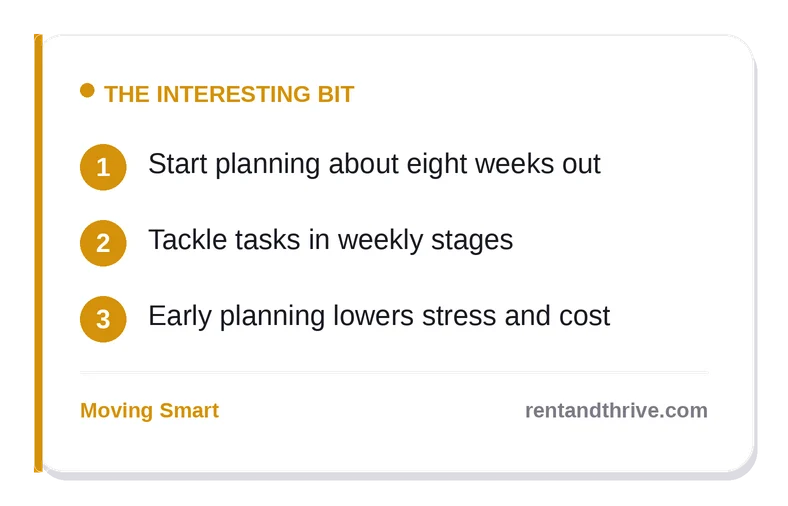
Most moving stress comes from trying to do everything at once in the final days. Breaking the process into weekly chunks, starting roughly two months out, lets each task get real attention while there is still time to fix problems. Early weeks handle planning and decluttering; later weeks handle logistics and packing, so nothing critical lands on moving day itself.
A phased plan also catches the easy-to-forget items, transferring utilities, updating your address, scheduling movers, that cause headaches when discovered too late. Spreading them across weeks turns a daunting list into a series of small, doable steps.
Turning the 8-Week Countdown Into Weekly Sprints
A move feels overwhelming because everything seems urgent at once, but spreading the work across eight weekly sprints keeps any single week light. Around eight weeks out, focus on logistics: confirm your move-out date and notice requirements, research movers or a rental truck, and start a folder for quotes and lease paperwork. This early window is also when you book popular movers, who fill up fast near month-end.
From there, each week takes a theme. Six weeks out, declutter room by room and start using up food and supplies you won’t carry along. Four weeks out, order packing materials and begin boxing things you rarely use. Two weeks out, handle address changes, utility transfers, and the bulk of packing. The final week is for essentials, cleaning, and a last walkthrough with photos to protect your deposit. Tackling tasks in stages, rather than in one frantic push, is what separates a smooth move from a chaotic one, and it leaves margin for the surprises every move seems to produce.
Turning the Countdown Into Weekly Sprints
A workable rhythm is to assign each week a theme. Early on, sort and purge belongings and research movers; in the middle weeks, gather supplies and begin packing rarely used items; in the final weeks, confirm logistics, pack the essentials, and handle address and utility changes. Keeping a simple checklist for each week makes progress visible and motivating.
Leaving the last few days mostly for finishing touches, a final clean, an essentials box, and a walkthrough, prevents the classic moving-day chaos. The goal is to arrive at move-in already organized rather than exhausted, which sets a calmer tone for settling into the new place.
Keeping an Essentials Box for the First Night
One of the simplest ways to reduce moving-day stress is to pack a clearly marked essentials box, or bag, for the first night in the new place. A few days of clothes, toiletries, chargers, basic tools, medications, and important documents mean you are not digging through dozens of boxes when you are exhausted. Loading it last and unloading it first keeps it accessible.
This small habit bridges the gap between arriving and being fully unpacked, which can take days. Knowing the necessities are in one easy-to-find place lets you settle in calmly rather than scrambling on a tiring evening.
Decluttering Before You Pack a Single Box
The cheapest and most effective early move in any relocation is getting rid of what you do not need before you pack it. Every item you discard, donate, or sell is one you do not have to box, transport, or find space for, which directly lowers the size of truck and the amount of labor your move requires. Starting this process weeks ahead, rather than during the final scramble, gives you time to do it thoughtfully.
Going room by room and being honest about what you actually use keeps the purge manageable. Selling usable items can even offset some moving costs, while donating lightens the load with less effort. A move is the rare moment when less stuff genuinely saves money.
Scheduling Movers and Truck Rentals Early
Whether you hire movers or rent a truck, booking early tends to secure better availability and rates, especially around the busy end-of-month and weekend windows when demand peaks. Leaving these arrangements to the last minute often means higher prices and fewer choices, so locking them in during the middle weeks of your countdown pays off. Comparing a couple of quotes before committing is worth the time.
Confirming the details, what is included, any deposits, and the timing, avoids surprises on moving day. If your schedule has any flexibility, choosing a mid-week or mid-month slot can lower the cost noticeably compared with the most in-demand times.
Handling Address Changes and Utility Transfers
Among the easiest things to forget in a move are the administrative tasks: updating your address, transferring or setting up utilities, and redirecting mail. Handling these in the weeks before move-in, rather than after, prevents the headache of arriving to no power or internet and missing important mail. A simple checklist of each account to update keeps it from slipping.
For utilities, coordinating the disconnect at your old place with the connect at the new one avoids paying for two homes at once or losing service in between. Giving providers a little lead time, especially for internet installation, means the essentials are ready when you walk in.
Leaving the Final Days for Finishing Touches
A well-paced moving countdown reserves the last few days for finishing touches rather than major work, which prevents the classic moving-day chaos. By the final stretch, the bulk of packing, logistics, and address changes should already be handled, leaving only a final clean, the essentials box, and a walkthrough. Arriving at move-in organized rather than exhausted sets a calmer tone.
Keeping a checklist for those last days ensures nothing critical slips, like returning keys or a final meter reading. The payoff for spreading the work across weeks is a final stretch that feels manageable instead of frantic.
Frequently Asked Questions
When should I start planning a move?
About eight weeks out, tackling tasks in weekly stages.
Why start so early?
Early planning lowers stress and helps you avoid rushed, costly decisions.
What goes first?
Sorting, decluttering, and booking movers or a truck.
Related reading
- Utility Setup Guide: Everything to Arrange Before Moving In
- How to Negotiate Rent on a New Apartment (Before You Move In)
- Apartment Red Flags to Watch For Before You Sign
- First Apartment Checklist: What You Actually Need to Buy