
Authorized User Strategy: How to Piggyback Your Way to Better Credit
Becoming an authorized user on someone else’s credit card can let their long, positive history help your score, a strategy often called piggybacking. It can work well, but both people should understand exactly what they are agreeing to.
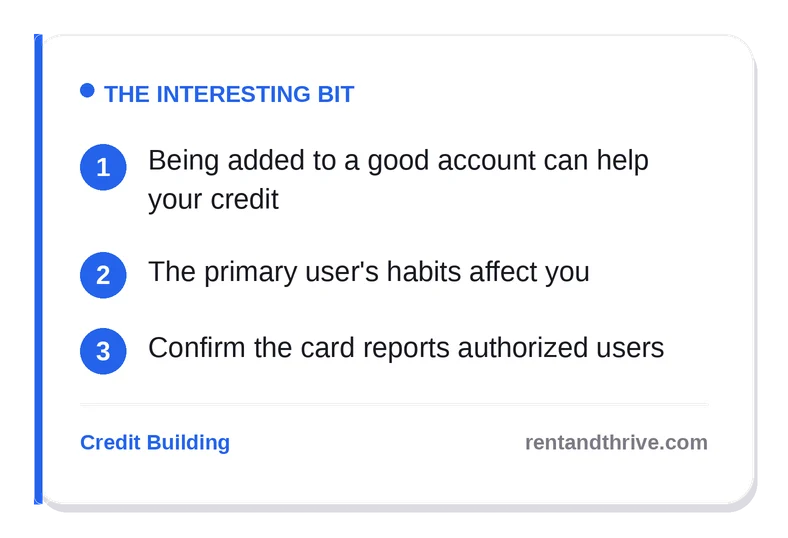
How Authorized-User Status Can Help
When you are added as an authorized user, the account’s history can appear on your credit report, potentially benefiting you from its age, low utilization, and on-time payments. For someone with little or no credit, inheriting a well-managed account’s track record can give a score a useful foundation it could not build alone in the same timeframe.
The strategy depends entirely on the underlying account being healthy. An old card with a high limit, low balance, and spotless payment history is the kind that helps; a newer or poorly managed account may do little or even hurt.
Authorized-User Strategy: Getting the Boost Without the Risk
Becoming an authorized user on someone else’s well-managed card can transfer their account’s history onto your credit file, a genuine shortcut for renters starting out. The account’s age, limit, and on-time record can show up on your report even if you never touch the card. The catch is that it works both ways: their misssteps can land on your file too.
Choose the account carefully. The ideal one is old, has a high limit with a low balance, and a flawless payment record, those traits are exactly what you want reflected back onto you. Confirm the issuer actually reports authorized users to the bureaus, since not all do, or the strategy quietly accomplishes nothing. You don’t need physical possession of the card or any spending power for the history to count, which keeps things simple between you and the primary cardholder. Set expectations up front, and revisit the arrangement if their usage changes. Treated as a complement to your own starter account rather than a substitute, it can meaningfully accelerate a thin file.
Getting the Boost Without the Risk
Authorized-user arrangements work best on a foundation of trust, because the relationship carries real exposure on both sides. The primary cardholder’s mistakes can appear on your report, and your spending, if you are given a card, is ultimately their responsibility. Many families do this without the authorized user ever using the card at all.
To keep it clean, agree in advance on whether you will spend, how any spending gets repaid, and how either of you can end the arrangement. Confirming that the issuer reports authorized users to the bureaus is also worth doing, since otherwise the strategy provides no credit benefit.
Setting Clear Expectations With the Cardholder
An authorized-user arrangement runs smoothly when both people agree on the terms up front. Deciding whether you will actually use a card, how any spending gets repaid, and how either party can end the arrangement prevents misunderstandings that could strain the relationship and the finances behind it. A brief, honest conversation is worth more than assumptions.
It is also wise to confirm the account stays healthy over time, since the primary cardholder’s later missteps can affect your report too. Keeping communication open lets you step away if the account’s management changes, protecting the credit benefit you signed up for.
Choosing the Right Account to Join
The entire value of becoming an authorized user rests on the health of the underlying account, so choosing the right one matters more than anything else. An older card with a high limit, a low balance, and a spotless payment history can lend its positive characteristics to your report, while a newer or poorly managed account may do little or even hurt. The account’s track record is what you are borrowing.
Because of this, the strategy works best with someone whose credit habits you trust and whose account is well established. A brief, honest look at how the account is managed is worth more than the gesture of being added to just any card.
Confirming that the issuer actually reports authorized users to the bureaus is also essential, since some do not, in which case the arrangement provides no credit benefit at all.
Managing the Trust on Both Sides
An authorized-user arrangement carries real exposure for both people, so clear expectations protect the relationship. The primary cardholder’s missteps can appear on your report, and any spending you do, if given a card, is ultimately their responsibility, which is why many families add an authorized user who never uses the card at all. Agreeing in advance on whether you will spend and how anything is repaid prevents friction.
It is also wise to agree on how either party can end the arrangement, so you can step away if the account’s management changes for the worse. Keeping communication open lets you protect the credit benefit you signed up for.
Approached with trust and clear terms, the strategy can give a thin file a useful boost. Treated casually, it can strain both finances and relationships, so the conversation up front is worth having.
Knowing When to End the Arrangement
An authorized-user arrangement should be revisited over time, because the account’s health can change. If the primary cardholder begins carrying high balances or misses payments, those developments can affect your report too, so agreeing in advance on how either party can end the arrangement lets you step away cleanly when needed. Staying informed about the account protects the benefit you signed up for.
Once your own credit is established, you may also find you no longer need the boost, at which point being removed is reasonable. Treating authorized-user status as a temporary leg up rather than a permanent fixture keeps it working in your favor and avoids exposure you no longer need.
Frequently Asked Questions
How does being an authorized user help?
A well-managed account you are added to can add positive history to your credit.
Whose habits matter?
The primary cardholder’s payment and balance habits affect you.
Does the card need to report it?
Yes, confirm the issuer reports authorized users to the bureaus.
Related reading
- Roth IRA vs. Traditional IRA: Which Is Better for Renters?
- How to Get Approved for an Apartment With Bad Credit
- Credit Builder Loans: Are They Worth It?
- Hard vs. Soft Credit Inquiries: What Renters Need to Know