Lease Renewal: How to Negotiate Lower Rent (And Win)
A lease renewal is a negotiation, even when it does not feel like one. Approaching it with preparation and the right timing gives you a real chance to keep your rent in check.
Why You Have Leverage at Renewal
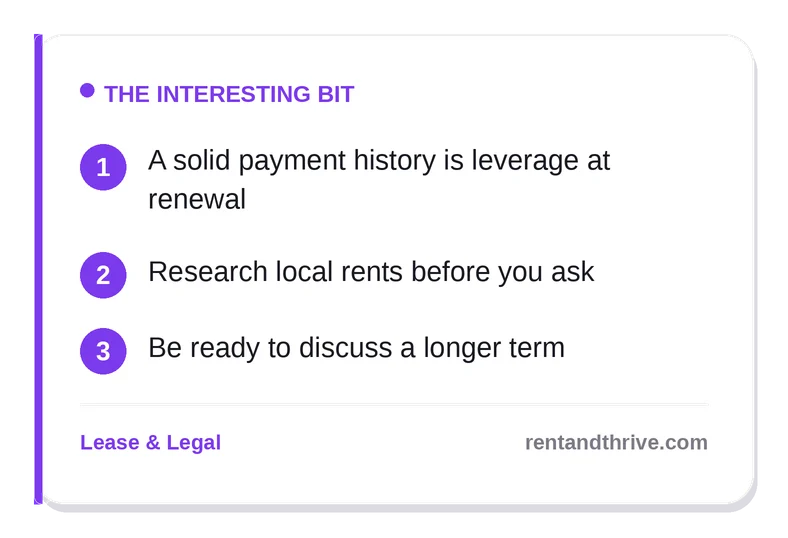
At renewal, a landlord faces a familiar choice: keep a reliable tenant or risk a vacancy and the cost of finding a new one. Turnover is expensive, screening, marketing, lost rent during a gap, so a tenant who pays on time and cares for the unit holds genuine bargaining power. Recognizing that value is what makes a confident, reasonable ask possible.
Timing strengthens your position. Raising the conversation well before the lease ends, when the landlord still has time to weigh the alternative, is generally more productive than waiting until the last moment.
Preparing the Case for a Lower Renewal
Lease renewal is a negotiation, even when it arrives as a take-it-or-leave-it letter, and renters who prepare consistently do better than those who simply accept the increase. Your leverage is real: turnover is expensive for landlords, weeks of vacancy, cleaning, listing fees, and the risk of a worse tenant. A reliable renter who pays on time is an asset they’d rather keep than gamble on replacing.
Build your case before you reply. Pull comparable listings in your building and neighborhood, especially any priced below your proposed renewal, and note your track record: on-time payments, length of tenancy, care of the unit. Open with a clear, friendly ask to hold rent flat or match the market, and if they can’t move on price, pivot to value, waived fees, free parking, a unit upgrade, or a longer term locked at today’s rate. Put the final agreement in writing before signing. Even holding an increase to zero in a rising market is money kept, and the worst outcome of a polite ask is simply the offer you already had.
If the Landlord Says No to a Lower Rent
Not every renewal negotiation succeeds, and having a plan for a no keeps you in control. If a rent reduction is off the table, pivoting to value, a longer rate lock, a minor upgrade, or waived fees, can still improve your deal. These concessions are sometimes easier for a landlord to grant than a lower headline rent.
If the renewal terms genuinely do not work, knowing your alternatives, including the cost and effort of moving, lets you decide from a position of information rather than pressure. Either way, keeping the conversation respectful protects the relationship for the remainder of your tenancy.
Timing the Renewal Conversation Right
When you raise a renewal negotiation matters nearly as much as how. Starting the conversation well before the lease ends, while the landlord still has time to weigh the cost of a vacancy, generally produces better results than waiting until the deadline looms. Early timing signals that you are a thoughtful, planning tenant.
It also gives both sides room to consider options beyond a flat rent change, like a longer term or a minor upgrade, without the pressure of an imminent move-out. A calm, early, well-prepared ask is far more likely to land than a last-minute one.
Researching Comparable Rents First
A renewal negotiation is far more persuasive when grounded in evidence, so researching what comparable units in your area currently rent for is a strong first step. If similar apartments are listing for less than your proposed renewal rate, that gap becomes a concrete, factual basis for your request rather than a vague hope. Landlords respond better to data than to pleas.
Gathering this information before the conversation also helps you set a realistic target. A specific, reasonable ask supported by market comparisons is more likely to land than an open-ended request to lower the rent.
Leaning on Your Value as a Reliable Tenant
At renewal, a landlord weighs keeping a known, reliable tenant against the cost and risk of a vacancy. Reminding them, tactfully, of your on-time payment history and good care of the unit underscores what they would be giving up. Turnover is expensive, so a dependable tenant holds genuine bargaining power, especially with smaller landlords.
Timing strengthens this further: raising the conversation well before the lease ends, while the landlord still has time to weigh the alternative, is generally more productive than waiting until the deadline. A confident but respectful approach reflects the value you bring.
Pivoting to Value If the Rent Won’t Budge
Not every renewal negotiation succeeds on price, so having a fallback keeps you in control. If a rent reduction is off the table, value-based asks, a longer rate lock, a minor upgrade, waived fees, or added parking or storage, can still improve your deal and are sometimes easier for a landlord to grant. These concessions can be worth real money even when the rent holds.
If the terms genuinely do not work, knowing your alternatives, including the cost and effort of moving, lets you decide from information rather than pressure. Either way, keeping the conversation professional and any agreement in writing protects the relationship and the outcome.
Knowing Your Alternatives Strengthens Your Position
A renewal negotiation goes better when you genuinely understand your alternatives, including what comparable units cost and what moving would involve. Knowing you have realistic options, even if you would prefer to stay, lets you negotiate calmly rather than from a sense of being stuck. That quiet confidence often comes through in the conversation itself.
If the renewal terms truly do not work, being prepared to move, having researched costs and possibilities, means a no is not a crisis. Either way, deciding from information rather than pressure leads to a better outcome, whether that is a improved renewal or a well-planned move.
Frequently Asked Questions
Can I negotiate my lease renewal?
Often yes, especially with a good payment history and flat local rents.
What is my leverage?
Being a reliable tenant the landlord does not want to lose and re-list.
How should I ask?
Research comparable rents and propose a specific, reasonable term.
Related reading
- How to Negotiate Rent on a New Apartment (Before You Move In)
- How to Start Investing When You’re Paying Rent
- Rent Withholding and Repair-and-Deduct: Legal Remedies for Renters
- Breaking a Lease Early: Your Options and Legal Rights