Eviction Process Explained: What Renters Need to Know
Eviction is a legal process, not something a landlord can do on a whim. Understanding the general timeline and your rights helps you respond calmly and protect yourself if you ever receive a notice.
How the Eviction Process Generally Works
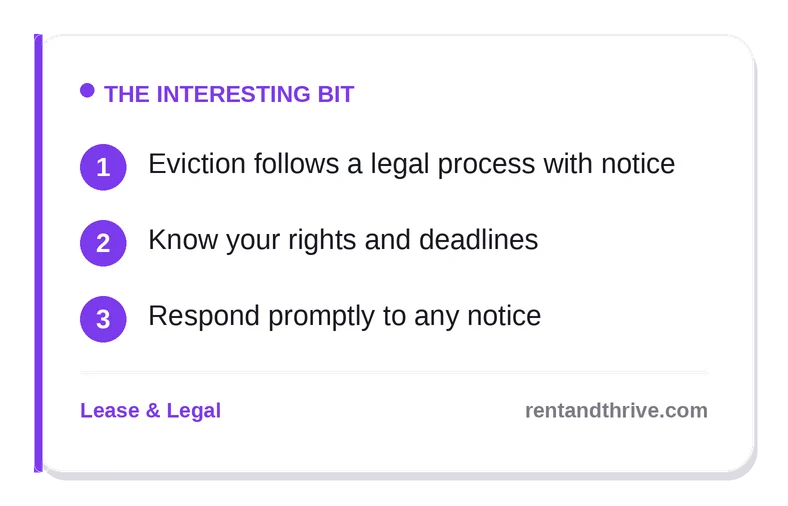
In most places, eviction follows defined legal steps that usually begin with a written notice, such as a notice to pay or cure or to vacate, giving the tenant a set period to respond. If the issue is not resolved, the landlord must typically file a court case, and only a court order, enforced by an official, can actually remove a tenant. A landlord generally cannot lawfully change the locks or force you out without going through this process.
The specifics, notice periods, allowed reasons, and procedures, vary considerably by state and city. Knowing that eviction requires formal steps, and time, is what gives a tenant room to respond rather than panic.
Understanding the Eviction Timeline Before It Starts
Eviction is a legal process with defined steps, not something a landlord can do on a whim, and understanding the sequence is what gives renters room to respond. It generally begins with a written notice, to pay overdue rent, to correct a lease violation, or to vacate, each with a deadline set by local law. Only if that notice period passes unresolved can a landlord file a case in court; they cannot legally change the locks, remove your belongings, or shut off utilities to force you out.
Time is your most valuable asset once a notice arrives, so act immediately rather than freezing. If the issue is unpaid rent, paying within the notice window often stops the process entirely in many areas. Respond to any court filing by the stated date, because ignoring it typically means losing by default. Know your rights and deadlines, gather your lease and payment records, and seek local legal aid or tenant-rights help, which is often free and can identify defenses or negotiate more time. Many eviction cases end in agreements rather than removal. The renters who fare best are the ones who understand the timeline and engage early instead of hoping it goes away.
Understanding the Timeline Before It Starts
Acting early in the process matters most. Reading any notice carefully, noting deadlines, and responding, whether by paying, correcting the issue, or seeking help, can sometimes resolve matters before they reach court. Ignoring a notice generally makes things worse and faster.
Tenants typically have the right to receive proper notice and to present their side in court, and many areas offer legal aid or tenant hotlines that can explain local procedure and possible defenses. Because the stakes and rules are significant, getting informed help quickly, and keeping records of all communication, is the most protective thing a renter facing eviction can do.
Knowing Where to Find Help Quickly
Facing a possible eviction is stressful, and getting informed help early can change the outcome. Many areas offer legal aid organizations, tenant hotlines, or court self-help resources that explain local procedure and possible defenses, often at low or no cost. Reaching out promptly, rather than waiting, preserves more of your options.
Keeping copies of all notices, payment records, and communication gives any advisor the information they need to help effectively. Because eviction rules and timelines vary widely by location, local guidance tailored to your jurisdiction is far more reliable than general assumptions about how the process works.
Recognizing the Steps of the Process
In most places, eviction follows defined legal steps rather than happening at a landlord’s whim. The process usually begins with a written notice giving the tenant a set period to respond, and if the issue is not resolved, the landlord must typically file a court case. Only a court order, enforced by an official, can actually remove a tenant, and a landlord generally cannot lawfully change the locks or force you out without going through this process.
The specifics, notice periods, allowed reasons, and procedures, vary considerably by state and city. Knowing that eviction requires formal steps, and time, is what gives a tenant room to respond rather than panic.
Responding to a Notice Promptly
Acting early in the process makes the biggest difference. Reading any notice carefully, noting deadlines, and responding, whether by paying, correcting the issue, or seeking help, can sometimes resolve matters before they reach court. Ignoring a notice generally makes things worse and faster, so prompt attention is essential.
Keeping copies of all notices, payment records, and communication gives you a clear record if the matter proceeds. A calm, timely response, grounded in documentation, protects your options far better than delay or avoidance.
Finding Help and Knowing Your Rights
Tenants typically have the right to receive proper notice and to present their side in court, and many areas offer legal aid organizations, tenant hotlines, or court self-help resources that explain local procedure and possible defenses, often at low or no cost. Reaching out promptly, rather than waiting, preserves more of your options.
Because eviction rules and timelines vary widely by location, guidance tailored to your jurisdiction is far more reliable than general assumptions. Getting informed help quickly, and keeping records of all communication, is the most protective thing a renter facing eviction can do.
Keeping Records Throughout the Process
If you ever face a possible eviction, keeping organized records is one of the most protective things you can do. Copies of all notices, payment confirmations, and written communication with the landlord create a clear timeline that any advisor or court can rely on. Good documentation turns a stressful situation into one you can respond to methodically.
Because procedures and possible defenses vary by location, those records also help a legal aid organization or tenant hotline assist you effectively. Reaching out for guidance early, with your paperwork in order, preserves more of your options than facing the process unprepared.
Frequently Asked Questions
How does the eviction process work?
It follows a legal process with required notice and court steps that vary by state.
What should I do if I get a notice?
Respond promptly and know your rights and deadlines.
Can I be removed immediately?
Generally no, a landlord must follow the legal process.
Related reading
- Hard vs. Soft Credit Inquiries: What Renters Need to Know
- Renters Insurance Explained: What It Covers and How Much You Actually Need
- Credit Mix Explained: Why Renters Need More Than One Account Type
- Emergency Fund for Renters: How Much Do You Really Need?