Rent Withholding and Repair-and-Deduct: Legal Remedies for Renters
Repair-and-deduct and rent withholding are legal tools that, in some places, let renters respond when a landlord ignores serious repairs. They are powerful but tightly regulated, and using them wrong can put your tenancy at risk.
What These Remedies Are Meant to Do
Repair-and-deduct generally allows a tenant, under specific conditions, to pay for an essential repair the landlord has failed to make and subtract the cost from rent. Rent withholding allows withholding some or all rent until serious habitability problems are fixed, often into an escrow account rather than simply not paying. Both exist to give renters leverage when a landlord neglects vital maintenance.
Crucially, these remedies typically apply only to significant habitability issues, not cosmetic ones, and availability differs sharply by state, with some jurisdictions not recognizing them at all. Knowing whether your location offers them is the first step.
Using Repair-and-Deduct and Rent Withholding Safely
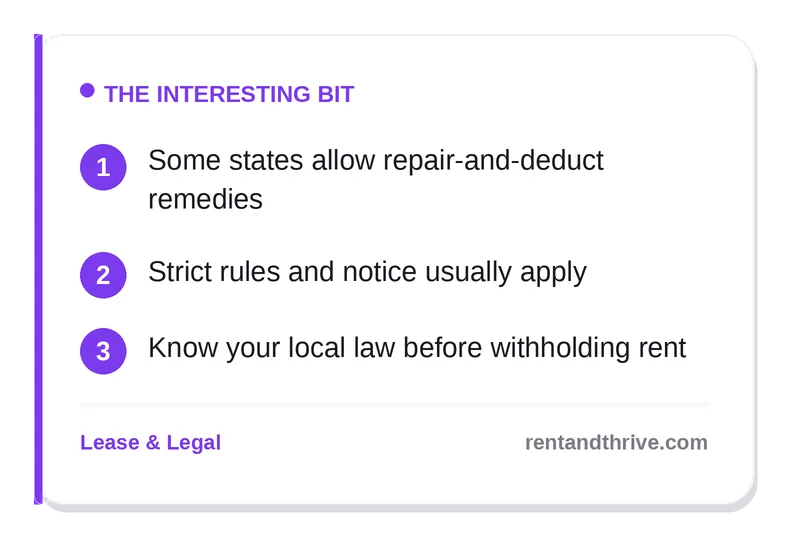
When a landlord ignores a serious repair, many states give renters two self-help remedies: repair-and-deduct, where you pay to fix the problem and subtract the cost from rent, and rent withholding, where you hold rent, often in an escrow account, until the issue is resolved. Both can be effective, but both are hedged with strict rules, and using them wrong can put your tenancy at risk.
Treat these as last resorts that follow a precise sequence. First, the problem usually must be a genuine habitability issue, not a cosmetic complaint. Notify the landlord in writing and give the legally required time to respond. Keep meticulous records, the written notice, photos, receipts, and any contractor estimates. Many states cap how much you can deduct or require that rent be withheld into escrow rather than simply not paid. Because the specifics vary so much and the consequences of a misstep include eviction, confirm your local law, or consult a tenant-rights resource, before withholding a single dollar. Done by the book, these remedies pressure an unresponsive landlord into action; done loosely, they hand them grounds against you.
Using Them Safely and Lawfully
These tools almost always come with strict prerequisites: proper written notice to the landlord, a reasonable time to repair, dollar limits on deductions, and documentation of the problem and any work done. Skipping a step, or using the remedy for a non-qualifying issue, can expose you to nonpayment claims or even eviction, so the procedure matters as much as the right itself.
Because the rules are detailed and the consequences of getting them wrong are serious, this is an area where confirming your specific state’s requirements, ideally with a tenant resource or legal aid organization, before withholding or deducting anything is well worth the effort. Keeping every notice and receipt creates the paper trail these remedies depend on.
When to Seek Help Before Acting
Repair-and-deduct and rent withholding carry real risk if used incorrectly, so knowing when to get guidance is part of using them safely. If you are unsure whether your situation qualifies, whether your state even allows the remedy, or how to follow the required steps, consulting a tenant resource or legal aid organization before acting can prevent a costly mistake.
Because these remedies can expose you to nonpayment claims when misapplied, the safe path is to confirm the procedure and your eligibility first, then document every notice and receipt. Getting it right matters more than getting it done quickly, given what is at stake.
Why These Remedies Are Tightly Regulated
Repair-and-deduct and rent withholding are powerful tools, which is exactly why the law surrounds them with strict conditions. They generally apply only to significant habitability problems, not cosmetic ones, and availability differs sharply by state, with some jurisdictions not recognizing them at all. Knowing whether your location offers a given remedy is the first step before considering it.
These remedies exist to give renters leverage when a landlord neglects vital maintenance, but they are not a general-purpose response to any dispute. Understanding their narrow, regulated scope prevents you from reaching for a tool that does not apply to your situation.
Meeting the Documentation Requirements
Using these remedies almost always requires meeting specific prerequisites: proper written notice to the landlord, a reasonable time to repair, often dollar limits on deductions, and documentation of the problem and any work done. Skipping a step can expose you to nonpayment claims, so the procedure matters as much as the right itself. Keeping every notice and receipt builds the paper trail these remedies depend on.
Some jurisdictions also require withheld rent to be placed in escrow rather than simply not paid, which is another detail to confirm. Following the exact process for your location is what keeps the remedy lawful and effective.
Knowing When to Get Legal Help
Because the consequences of misapplying these remedies are serious, knowing when to seek guidance is part of using them safely. If you are unsure whether your situation qualifies, whether your state even allows the remedy, or how to follow the required steps, consulting a tenant resource or legal aid organization before acting can prevent a costly mistake. Getting it right matters more than getting it done quickly.
The safe path is to confirm the procedure and your eligibility first, then document everything as you go. When significant repairs and rent are at stake, that upfront caution protects your tenancy and your finances.
Frequently Asked Questions
Can I withhold rent for repairs?
Some states allow repair-and-deduct or withholding, but with strict rules.
What are the risks?
Doing it wrong can lead to eviction, so know your local law first.
Should I get advice?
For serious disputes, consult a local tenant resource or attorney.
Related reading
- Renters Insurance Explained: What It Covers and How Much You Actually Need
- Emergency Fund vs. Investing: Which Should Renters Prioritize?
- REITs: How Renters Can Invest in Real Estate Without Buying Property
- HSA as an Investment Account: The Triple Tax Advantage Renters Ignore