Secured Credit Cards: Are They Worth It for Credit Building?
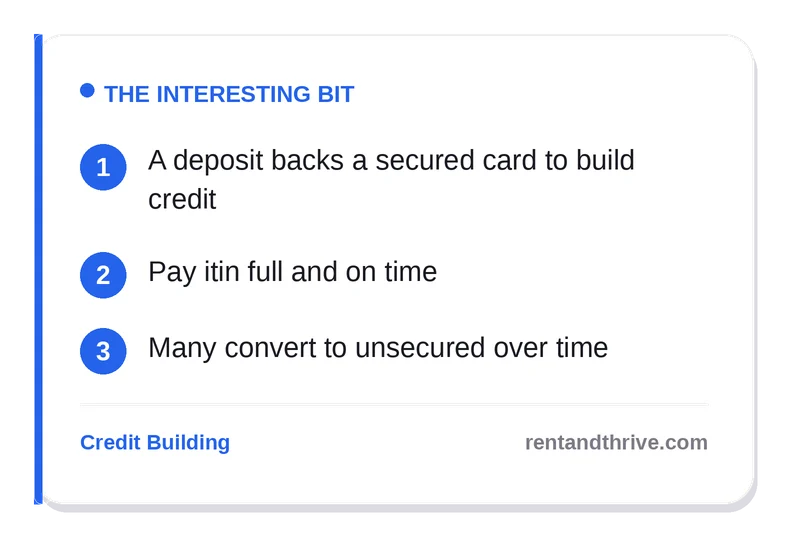
A secured credit card requires a refundable cash deposit that usually sets your credit limit, which makes it accessible when a regular card is out of reach. For many renters it is a practical bridge, but only if you read the terms first.
How Secured Cards Build Credit
A secured card reports to the credit bureaus just like a standard card, so on-time payments and low balances build positive history. The deposit reduces the issuer’s risk, which is what makes approval possible with little or no credit. Used responsibly, it can establish the payment record that eventually qualifies you for unsecured products.
The deposit is generally refundable, returned when you close the account in good standing or when the issuer upgrades you to an unsecured card. That refundable nature is what separates a secured card from a fee-heavy product and is a key thing to confirm before applying.
Secured Cards: Reading the Fine Print Before You Apply
A secured card asks for a refundable deposit that usually becomes your credit limit, then reports to the bureaus like any other card. For renters with thin or damaged credit, it’s one of the most reliable on-ramps. But the cards vary more than their glossy pages suggest, and the differences decide whether the product helps you or quietly costs you.
Before applying, confirm four things. First, that it reports to all three major bureaus, since a card that reports to only one builds far less. Second, the fee structure, the best options charge no annual fee. Third, whether there’s a clear graduation path to an unsecured card that returns your deposit after a stretch of on-time payments. Fourth, whether it pays any interest on the deposit. Use it lightly, pay in full, and keep utilization low, and within a year you should see a real score and the option to move up to a standard card while recovering your deposit.
Reading the Fine Print Before You Apply
Not all secured cards are equal, so the details deserve a close look. Compare any annual or monthly fees against the value, confirm that the card reports to all three major bureaus, and check whether there is a path to graduate to an unsecured card. A card that does not report, or that piles on fees, undercuts the whole purpose.
Because you intend to pay in full each month, the interest rate should matter less, but it is still worth knowing. The features that matter most for credit building are consistent reporting and manageable costs, not rewards, so prioritize those when choosing.
Knowing When to Move Beyond a Secured Card
A secured card is a stepping stone, not a permanent destination. After several months of on-time payments and low balances, many people qualify to graduate to an unsecured card, sometimes with the same issuer, which returns the deposit and may offer better terms. Watching for that transition keeps the card working for you.
If an issuer does not automatically upgrade, it can be worth asking or applying for an unsecured product once your credit has improved. The goal is to use the secured card to establish history and then move on, so check periodically whether you have outgrown it.
How the Deposit and Limit Work Together
With a secured card, the refundable deposit you put down usually becomes your credit limit, which is what allows approval when your credit is thin or damaged. Because the issuer holds that deposit as security, its risk is low, and you get a real credit card that reports your activity to the bureaus just like an unsecured one. The deposit is generally returned when you close the account in good standing or graduate to an unsecured card.
Understanding that the deposit is your money, held temporarily, helps frame the card as a tool rather than a fee. Choosing a deposit amount you can comfortably set aside, while large enough to give you a workable limit, is part of using it well.
Confirming that the card reports to all three major bureaus before applying is essential, since a secured card that does not report builds nothing. That single feature matters more than rewards or perks for credit-building purposes.
Using a Secured Card to Build, Then Move On
The way to get the most from a secured card is to use it lightly and pay it off in full every month, which builds positive history without interest or debt. Charging a small, recurring expense and paying the statement balance demonstrates responsible use while keeping your utilization low, both of which support your score. The card does not need to carry a balance to help, contrary to a common myth.
After several months of on-time payments, many issuers offer to graduate you to an unsecured card, which returns your deposit and may bring better terms. Watching for that transition, or asking about it, keeps the card from becoming a permanent arrangement once it has done its job.
Viewed this way, a secured card is a stepping stone: you use it to establish a track record, then move on to products that no longer require a deposit. Knowing when you have outgrown it is part of the strategy.
Comparing Secured Cards Before Committing
Not all secured cards are equal, so a quick comparison before applying pays off. Beyond confirming the card reports to all three bureaus, it helps to weigh any annual or monthly fees against the value, and to check whether there is a clear path to graduate to an unsecured card and recover your deposit. A card that piles on fees or never upgrades undercuts the purpose.
Because you intend to pay in full each month, the interest rate matters less, though it is still worth knowing. The features that count most for credit building are reliable reporting and manageable costs, so prioritizing those over rewards leads to the better choice.
Frequently Asked Questions
Are secured credit cards worth it?
They are a useful way to build credit when you cannot qualify for a regular card.
How do they work?
A refundable deposit backs the card, and on-time use builds history.
Do they become regular cards?
Many issuers convert them to unsecured cards over time.
Related reading
- Credit Builder Loans: Are They Worth It?
- Credit Building 101: A Complete Guide for Renters Starting from Zero
- How to Get Approved for an Apartment With Bad Credit
- Hard vs. Soft Credit Inquiries: What Renters Need to Know