
The Renter’s Annual Financial Checklist: 12 Money Moves to Make Each Year
An annual financial review catches the things a monthly budget misses, drifting subscriptions, an outdated insurance policy, a savings rate that never grew with your income. Turning it into a repeatable yearly habit is how renters keep small problems from compounding.
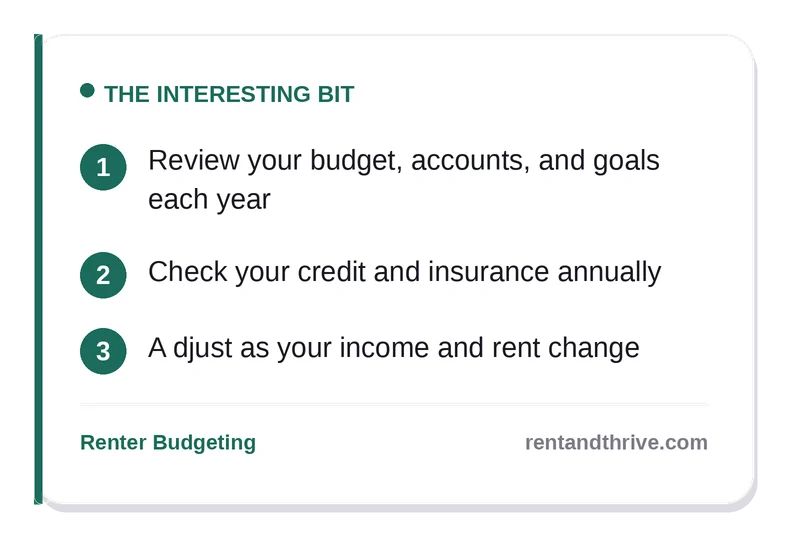
The Money Moves Worth Reviewing Once a Year
Some financial tasks only need attention annually but matter a lot when ignored. Renters benefit from checking their credit report, reviewing renter’s insurance coverage and price, reassessing savings and any investing contributions, and auditing recurring charges that have quietly crept up. Each of these can drift for months without notice, which is exactly why a scheduled review is valuable.
A yearly look is also the natural time to revisit goals. Income, rent, and priorities all change, and a plan that fit last year may need adjusting, especially the savings rate, which ideally rises as earnings do rather than staying frozen.
Turning the Annual Checklist Into a Recurring Calendar
A yearly financial checklist only works if it actually happens, so the trick is to attach each task to a date you won’t ignore. Tie your credit-report pull to a birthday, your insurance review to your lease-renewal month, and your subscription audit to the start of a new year. Putting recurring reminders on a calendar converts good intentions into a system that runs whether or not you feel motivated.
For renters, a few items deserve attention each year: confirm your renter’s insurance still matches your belongings, shop your policy against competitors, check whether your rent payments could be reported to build credit, and refresh your emergency and moving funds against today’s local rents. Also revisit your lease terms before renewal season so you negotiate from a position of preparation, not pressure. Treat the checklist as a maintenance routine, like changing smoke-detector batteries, and the small annual effort compounds into noticeably better financial footing year over year.
Turning the Checklist Into a Recurring System
A checklist only helps if it actually happens, so anchoring it to a fixed date, the new year, a birthday, or a lease anniversary, makes it routine rather than something you mean to get to. A recurring calendar reminder with the list attached removes the need to remember it at all.
Breaking the review into a few short sessions rather than one marathon makes it far more likely to get done. Spreading the tasks across a couple of weekends keeps the process manageable, and finishing it each year builds a clear, year-over-year picture of your financial progress.
Tracking Year-Over-Year Progress
One underrated benefit of an annual review is the record it creates. Comparing this year’s snapshot, savings, debt, credit, coverage, to last year’s turns vague feelings about money into visible progress, which is motivating and clarifying. Even a simple saved summary makes the trend easy to see.
That history also surfaces slow problems a single month would hide, like a savings rate that never rose with income or an insurance premium that crept up. Reviewing year over year lets you course-correct on the things that drift quietly, which is exactly where an annual checkup earns its keep.
Adding a Mid-Year Financial Check-In
An annual review is valuable, but a lighter mid-year check-in catches problems before they compound for a full twelve months. Halfway through the year is a natural moment to confirm you are on track with savings goals, review whether spending has drifted, and adjust for any changes in income or rent. It need not be exhaustive, just enough to course-correct while there is still time.
Treating the mid-year look as a brief tune-up rather than a full audit keeps it from feeling like a chore. Pairing it with the main annual review gives you two checkpoints a year, which is usually enough to keep your finances aligned with your goals without constant monitoring.
Aligning the Review With Tax Season
Tying part of your annual financial review to tax season makes practical sense, because you are already gathering income and expense information at that time. Reviewing your withholding, confirming you have records for any deductions, and checking on tax-advantaged savings while the numbers are in front of you turns an obligation into an opportunity. It also surfaces whether any adjustments are worth making for the year ahead.
Because tax rules can be detailed and change over time, a tax professional can help you make the most of this checkpoint, especially if your situation is at all complex. Even a simple alignment, doing the money review when you do your taxes, ensures the two reinforce each other rather than becoming separate burdens.
Using the Review to Reset Your Goals
An annual financial review is the natural moment to revisit not just your numbers but your goals, since both your circumstances and your priorities change over a year. Income, rent, and life plans evolve, and a savings target or budget that fit last year may need updating, especially the savings rate, which ideally rises as earnings grow rather than staying frozen. Resetting goals deliberately keeps your plan ambitious but realistic.
Writing down the refreshed goals, and the concrete steps to reach them, makes them far more likely to stick than vague intentions. Treating the review as a forward-looking reset, not just a backward-looking audit, is what turns it from a tally into a tool for steady progress year after year.
Frequently Asked Questions
What is a renter’s annual financial checklist?
A yearly review of your budget, accounts, credit, insurance, and goals.
Why review yearly?
Your income, rent, and needs change, so your plan should too.
What should I check?
Your budget, credit report, insurance coverage, and savings progress.
Related reading
- Tax-Advantaged Accounts Every Renter Should Know About
- How to Invest $100 a Month as a Renter and Actually Build Wealth
- Dollar-Cost Averaging: How to Invest Consistently on a Renter’s Budget
- First Apartment Checklist: What You Actually Need to Buy