
How to Stop Living Paycheck to Paycheck as a Renter
Living paycheck to paycheck means every dollar is spoken for before the next deposit arrives, leaving no margin for the unexpected. Breaking the cycle is usually a matter of creating a small buffer and widening the gap between income and outflow, one step at a time.
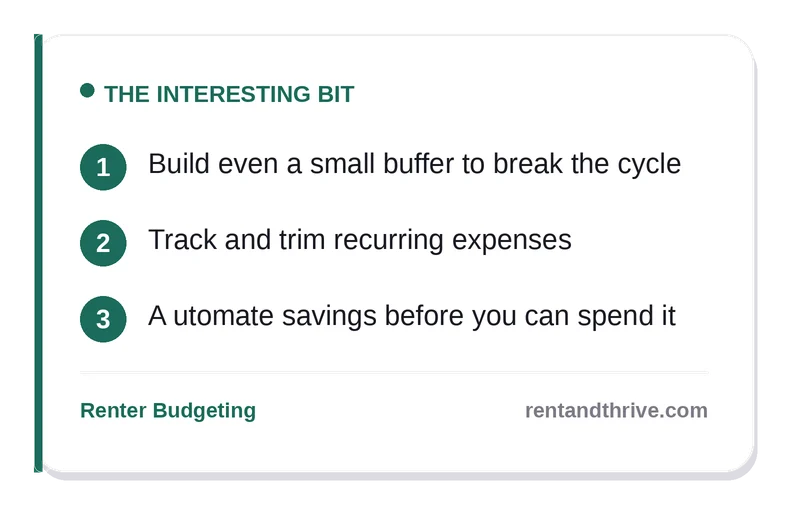
Creating the First Buffer Between You and Zero
The defining feature of the paycheck-to-paycheck cycle is timing: bills and income land in a constant near-collision. The first goal is not a giant emergency fund but a modest cushion, even a few hundred dollars, that absorbs a small surprise so it does not force a missed bill or new debt. That initial buffer is what loosens the cycle’s grip.
Building it often starts with finding a little breathing room in the budget, pausing an unused subscription, trimming a flexible category, or redirecting a windfall, and sending that money straight to savings before it can be spent. Progress here is psychological as much as financial.
Breaking the Paycheck-to-Paycheck Cycle One Buffer at a Time
Living paycheck to paycheck is less about income than timing: money arrives and leaves in the same breath, so any surprise becomes a crisis. The escape isn’t a sudden raise; it’s building a one-paycheck buffer that puts a week or two of breathing room between you and every bill. Start absurdly small, even $20 a paycheck, automated, so the habit forms before your spending notices.
Attack the cycle from both ends. On the expense side, audit recurring charges, subscriptions, fees, and forgotten free trials are the easiest wins, and call providers to renegotiate phone, internet, or insurance. On the income side, even a temporary side stream can fund the buffer faster. For renters, the milestone that changes everything is holding enough to cover one month of rent and essentials in savings; once that exists, a late client payment or a car repair stops triggering panic. Each buffer you build makes the next dollar easier to keep.
Widening the Gap Between Income and Expenses
Lasting change comes from the gap between what you earn and what you spend. On the spending side, the largest fixed cost is usually housing, so negotiating a renewal, taking on a roommate, or choosing a cheaper unit can move the needle more than dozens of small cuts. Reviewing recurring expenses for anything you no longer value frees up room with little ongoing effort.
On the income side, even a temporary or part-time addition can accelerate the buffer and break the cycle faster. Whichever lever you pull, automating savings so the gap is captured before you can spend it tends to be the difference between a one-time improvement and a permanent one.
Protecting Your Progress From Backsliding
Once you have built a small buffer and widened the gap between income and spending, the challenge becomes keeping it. Lifestyle creep, where rising income quietly invites rising spending, is the most common way people slip back into the paycheck-to-paycheck cycle. Deciding ahead of time to direct raises and windfalls toward savings, not new spending, guards against it.
Automating savings and periodically reviewing recurring costs keep the gains locked in without constant willpower. Breaking the cycle is the hard part; staying out of it is mostly about not letting expenses rise to meet every increase in income.
Addressing High-Interest Debt in the Cycle
High-interest debt is often what keeps the paycheck-to-paycheck cycle spinning, because interest charges consume money that could otherwise build a buffer. Once you have a small starter cushion, directing extra money toward the highest-interest balances generally frees up the most cash flow over time, since every dollar of interest avoided is a dollar back in your budget. Reducing those payments widens the gap between income and outflow.
Approaches vary, some prefer to attack the highest interest rate first, others the smallest balance for momentum, and the right one is the one you will stick with. Because debt situations differ, a nonprofit credit counselor can help you weigh options like consolidation, and consistent payments paired with not adding new high-interest debt are what break the cycle for good.
Raising Income to Escape the Squeeze
Cutting expenses can only go so far, so for many renters the faster route out of the paycheck-to-paycheck squeeze is increasing income. Even a temporary or part-time addition, picking up extra shifts, a side project, or negotiating a raise where warranted, can accelerate the buffer and create breathing room that spending cuts alone cannot. The key is directing that new income toward the buffer rather than letting it expand your spending.
Pairing a modest income increase with automated savings captures the gain before it can be absorbed by lifestyle creep. Combined with trimming the largest fixed costs, especially housing, raising income is often what finally turns a perpetually tight budget into one with margin.
Locking In Progress With Automation
Once you have created some breathing room between income and expenses, automation is what keeps it from eroding. Setting up automatic transfers to savings on payday, before the money can be spent, captures the gap consistently and removes the monthly temptation to skip it. Automation turns a one-time improvement into a durable habit that runs without willpower.
Pairing automated savings with a periodic review of recurring expenses guards against the slow creep of new subscriptions and lifestyle inflation. The combination, capturing the surplus automatically and pruning expenses occasionally, is what keeps a hard-won escape from the paycheck-to-paycheck cycle from quietly unraveling over time.
Frequently Asked Questions
How do I stop living paycheck to paycheck?
Build even a small buffer, trim recurring costs, and automate savings.
Where do I start?
Track spending to find leaks, then redirect that money to a buffer.
Does automating savings help?
Yes, saving before you can spend it is one of the most effective habits.
Related reading
- Tax-Advantaged Accounts Every Renter Should Know About
- How to Invest $100 a Month as a Renter and Actually Build Wealth
- Dollar-Cost Averaging: How to Invest Consistently on a Renter’s Budget
- Renter’s Insurance: What It Covers and Why You Need It