Cash Envelope System for Renters: Old-School Method, Modern Results
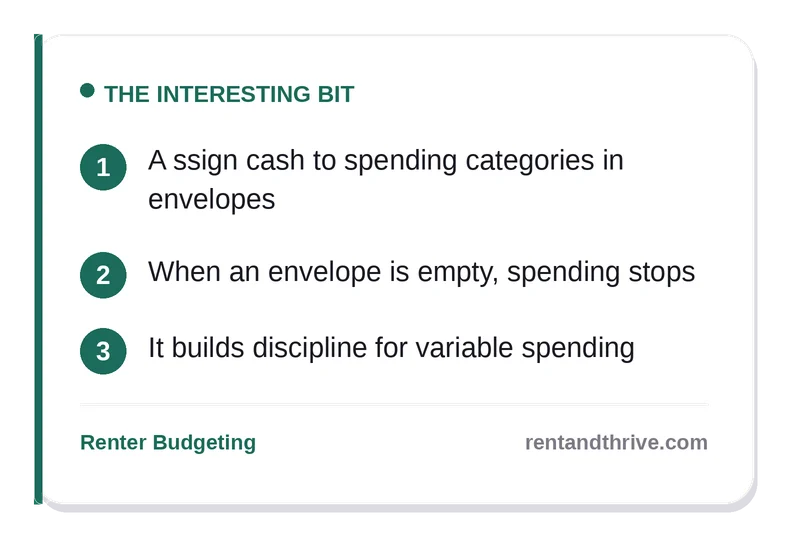
The cash envelope system caps spending by category using physical or digital “envelopes”: when an envelope is empty, that category is done for the month. It feels old-school, but the logic still works in a tap-to-pay world.
Why a Decades-Old Method Still Curbs Overspending
The power of envelopes comes from a hard, visible limit. Handing over physical cash, or watching a dedicated balance shrink, creates a tangible sense of spending that swiping a card can mute. For categories where renters tend to overshoot, dining out, entertainment, shopping, that friction is exactly the point.
Because each envelope is self-contained, the system also prevents one category from quietly borrowing from another. When the grocery envelope is empty, you face the choice directly rather than discovering the overage weeks later on a statement.
Making the Cash Envelope System Work in a Card-First World
The cash envelope system is powerful because spending physical money hurts a little, which naturally slows impulse purchases. The classic version is simple: withdraw your discretionary budget, split it into labeled envelopes, groceries, dining, fun, and when an envelope is empty, that category is done for the month. For renters keeping a tight budget, the visible limit is exactly the friction that prevents overspending.
If carrying cash feels impractical or unsafe, run a digital version. Some banking apps let you create named sub-accounts or buckets that act like envelopes, and a few budgeting tools simulate the system with virtual envelopes tied to a single card. The principle survives the format: pre-decide the amount, watch it deplete in real time, and stop when it’s gone. Keep fixed costs like rent and utilities out of the envelopes entirely, those get paid first by transfer, so the envelopes only govern the flexible spending where willpower actually gets tested.
Running Envelopes in a Card-First World
You do not need actual cash to get the benefit. Many people recreate envelopes digitally using multiple account buckets, a budgeting app’s category limits, or even separate prepaid cards for specific categories. The mechanics differ, but the rule is the same: when the category’s allotment is gone, spending in it stops until next month.
A practical hybrid is to use cash only for the two or three categories you most struggle to control and let automatic payments handle fixed bills like rent and utilities. That keeps the discipline where it matters without forcing your whole financial life back into paper.
Knowing Which Categories to Put in Envelopes
The envelope system works best when applied selectively to the categories where you tend to overspend, rather than to your entire budget. Discretionary areas like dining out, entertainment, and shopping benefit most from a hard cap, while fixed bills such as rent and utilities are better left on automatic payment. Targeting the trouble spots keeps the system focused and sustainable.
Starting with just one or two envelopes and expanding only if it helps avoids overwhelming yourself. The method is a tool for self-control where you need it, not a rule you must impose on every dollar, and using it where it counts is what makes it stick.
Setting Up Digital Envelopes Without Cash
The envelope method does not require physical cash, and many people recreate it digitally to keep the discipline while paying by card. Options include using a budgeting app that enforces category limits, opening multiple named savings buckets at one bank, or dedicating separate prepaid or secondary cards to specific categories. The mechanism differs, but the rule stays the same: when a category’s allotment is spent, that category is done for the month.
A digital setup has the advantage of working seamlessly with automatic bill payments and online purchases, which pure cash cannot. The key is choosing a system where the limit is visible and a little hard to override, so the friction that makes envelopes effective is preserved even without paper.
Moving Beyond Envelopes Once Habits Stick
The envelope system is often most valuable as a training tool rather than a permanent structure. After a few months of hard category limits, many people internalize the spending awareness the method teaches and find they no longer need every envelope. At that point, you can keep envelopes only for the one or two categories you still struggle with and let the rest run on a simpler budget.
Transitioning gradually, rather than abandoning the system all at once, prevents old habits from creeping back. The goal of envelopes was never the envelopes themselves but the control they build, so graduating to a lighter approach once that control is established is a sign the method worked.
Combining Envelopes With Automatic Bill Pay
The envelope method works best when reserved for the categories you actually struggle to control, while predictable fixed bills are handled separately. Rent, utilities, and insurance are well suited to automatic payment, since they are consistent and not where overspending happens, and automating them ensures they are never missed. That frees the envelope discipline to focus on the flexible spending, dining out, entertainment, shopping, where limits matter most.
This hybrid keeps the benefit of envelopes, a hard cap on discretionary spending, without forcing your entire financial life into a cash-only system that does not fit modern bills. Targeting the method where it helps and automating the rest is what makes it sustainable over the long run.
Frequently Asked Questions
What is the cash envelope system?
Assigning cash to spending categories in envelopes and stopping when one is empty.
Does it work without physical cash?
Yes, digital envelope apps apply the same idea.
Who is it good for?
People who overspend in variable categories and want a hard limit.
Related reading
- Renters Insurance Explained: What It Covers and How Much You Actually Need
- Emergency Fund vs. Investing: Which Should Renters Prioritize?
- REITs: How Renters Can Invest in Real Estate Without Buying Property
- HSA as an Investment Account: The Triple Tax Advantage Renters Ignore