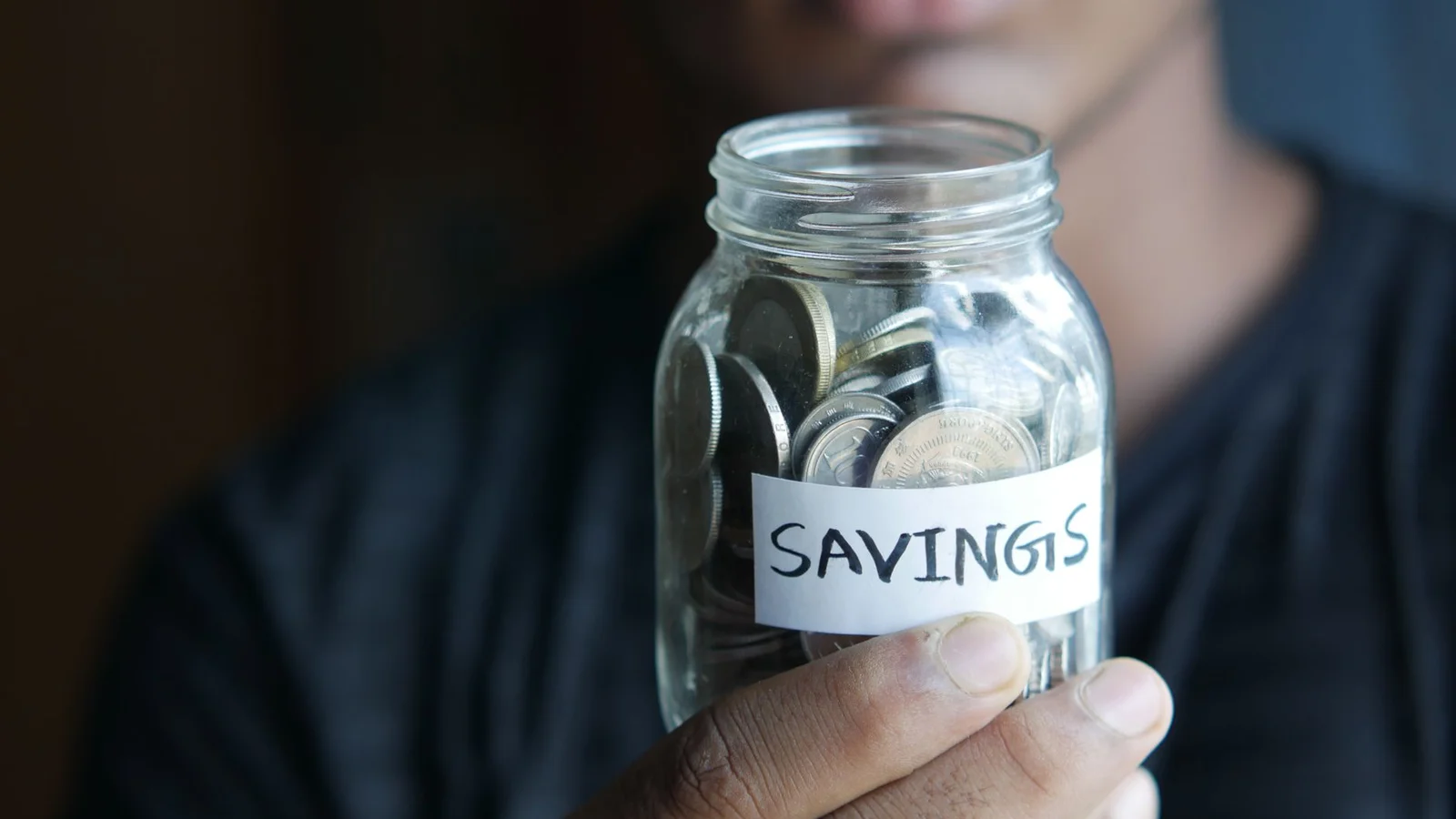
Emergency Fund vs. Investing: Which Should Renters Prioritize?
Emergency fund or investing is a common dilemma, and the answer is usually a sequence rather than a strict either-or. Getting the order right protects you while still building toward growth.
Why the Emergency Fund Usually Comes First
An emergency fund is your financial shock absorber, and without one, an unexpected expense can force you to sell investments at a bad time or take on high-interest debt. Because of that, common guidance is to establish at least a starter emergency fund before investing heavily, so a surprise does not unravel your longer-term plan. Stability comes before growth for a reason.
For renters in particular, whose housing situations can change with a lease, having accessible cash for the unexpected provides flexibility that an investment account cannot, since investments can lose value precisely when you might need to tap them.
Emergency Fund or Investing: Sequencing the Two
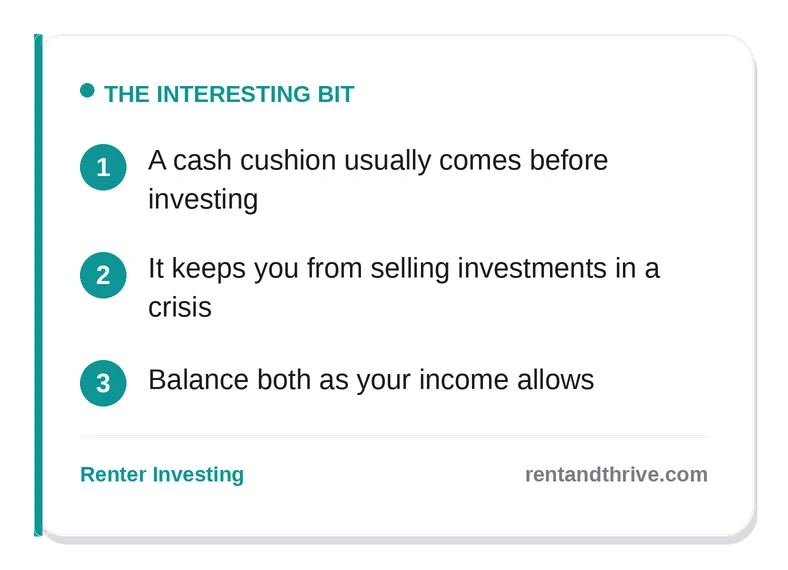
The question of whether to build an emergency fund or invest first has a sensible order rather than a single winner, because the two serve different jobs. An emergency fund is insurance, cash that keeps a job loss or surprise expense from becoming a catastrophe, while investing is growth that compounds over years. A cash cushion usually comes before serious investing, because without it you may be forced to sell investments at the worst possible moment, locking in losses, just to cover a crisis.
The practical sequence for most renters: first save a small starter cushion, then capture any employer retirement match since that return is unbeatable, then build the emergency fund toward a few months of essentials, and from there invest steadily for the long term. It doesn’t have to be strictly one-then-the-other; once a basic buffer exists, you can balance both, directing some money to savings and some to investments as your income allows. Renters should size the cushion with their moving risk in mind. The goal is to be protected against the short term while still letting time work on your long-term wealth.
Sequencing the Two
A widely used approach is to build a small starter emergency fund first, then split focus, contributing enough to capture any employer retirement match while continuing to grow the emergency fund toward a fuller cushion, and tackling high-interest debt along the way. Once the safety net is solid, more money can flow toward investing for the long term. The exact order depends on your job stability, debt, and risk tolerance.
This is rarely a one-time decision; as your situation evolves, the balance between saving and investing shifts. Because the right sequence is personal, especially when high-interest debt is involved, a financial professional can help you tailor it, but the general principle is to secure a baseline of safety before reaching for returns.
Adjusting the Balance as Life Changes
The right split between saving and investing is not fixed; it shifts with your circumstances. A job change, a new lease, rising income, or paying off debt can each tip the balance, which is why revisiting the sequence periodically keeps it sensible. What made sense at the start may need updating later.
Because the ideal order is personal, especially when high-interest debt is in the picture, a financial professional can help you tailor it. The enduring principle, secure a baseline of safety before reaching for returns, holds, but the exact mix is worth revisiting as your situation evolves.
Why the Safety Net Usually Comes First
An emergency fund is your financial shock absorber, and without one, an unexpected expense can force you to sell investments at a bad time or take on high-interest debt. Common guidance is to establish at least a starter emergency fund before investing heavily, so a surprise does not unravel your longer-term plan. Stability tends to come before growth for good reason.
For renters in particular, whose housing situations can change with a lease, accessible cash provides flexibility that an investment account cannot, since investments can lose value precisely when you might need to tap them. That mismatch is why the safety net generally takes priority.
Sequencing Savings, Matches, and Debt
A widely used approach is to build a small starter emergency fund first, then split focus, contributing enough to capture any employer retirement match while continuing to grow the emergency fund, and tackling high-interest debt along the way. Once the safety net is solid, more money can flow toward long-term investing. The exact order depends on your job stability, debt, and risk tolerance.
Capturing a match is often prioritized because it is essentially free money, while high-interest debt is addressed because its cost can outweigh likely investment returns. Balancing these rather than treating them as strictly either-or is what makes the sequence practical.
Revisiting the Plan as Circumstances Shift
The right split between saving and investing is not fixed; it shifts with your circumstances. A job change, a new lease, rising income, or paying off debt can each tip the balance, so revisiting the sequence periodically keeps it sensible. What made sense at the start may need updating later as your situation evolves.
Because the ideal order is personal, especially when high-interest debt is involved, a financial professional can help you tailor it. The enduring principle, secure a baseline of safety before reaching for returns, holds, but the exact mix is worth revisiting over time.
Frequently Asked Questions
Should I build an emergency fund or invest first?
Generally build a cash cushion before investing.
Why prioritize the fund?
It keeps you from selling investments at a bad time in a crisis.
Can I do both?
Yes, balance the two as your income allows.
Related reading
- Emergency Fund for Renters: How Much Do You Really Need?
- Micro-Investing Apps for Renters: Acorns, Stash, and Robinhood Compared
- Renters Insurance Explained: What It Covers and How Much You Actually Need
- Tax-Advantaged Accounts Every Renter Should Know About