
How to Find the Best Neighborhood for Your Budget
The right neighborhood is the one that fits both your life and your budget. Finding it means looking past the apartment itself to the area around it.
What to Weigh Beyond the Rent
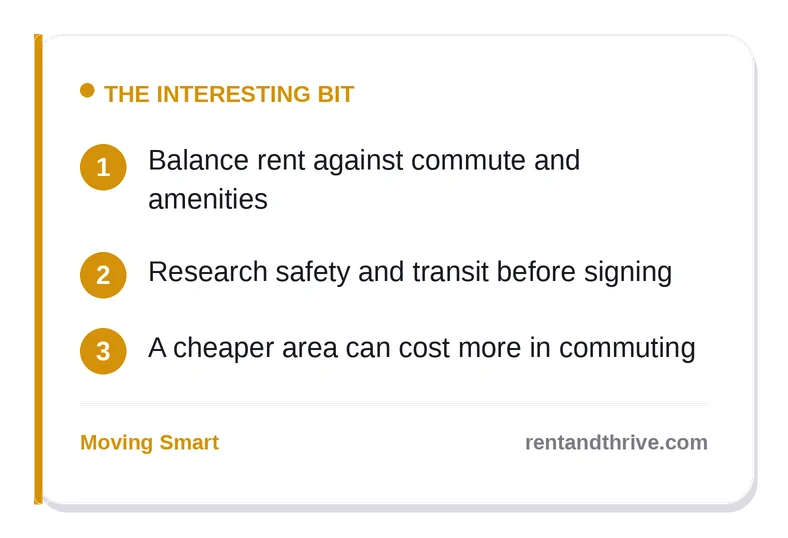
An apartment’s rent is only part of the cost of living somewhere. Commute time and transportation costs, proximity to work, groceries, and the things you do regularly, and the general safety and feel of an area all shape both your expenses and your daily quality of life. A cheaper unit far from everything can cost more once travel and time are counted.
Thinking through your actual routines, where you work, shop, and spend free time, helps you judge whether a neighborhood genuinely fits or just looks good in a listing. The best value balances affordable rent with low friction in everyday life.
Finding the Right Neighborhood for Your Budget
The cheapest rent isn’t always the cheapest neighborhood, because where you live shapes a dozen other costs. A unit far from work might save on rent but cost more in commuting time and transportation, while a slightly pricier area within walking distance of transit, groceries, and your job can come out ahead overall. Look at the total cost of living in a place, not just the lease figure.
Do your homework before committing. Visit at different times, a weekday morning and a weekend night, to gauge noise, safety, and the real feel of the area. Map the essentials you use, grocery stores, transit stops, a pharmacy, and check commute times during actual rush hour rather than trusting an off-peak estimate. Talk to current residents if you can, and research the basics like parking and walkability. Renters have an underrated advantage here: the flexibility to test a neighborhood on a shorter lease before settling in. Matching the area to both your budget and your daily life prevents the common regret of saving on rent only to spend it back in time, transport, and frustration.
Researching a Neighborhood Before You Commit
Visiting at different times of day and on different days reveals things a listing never will, noise, traffic, parking, and how the area actually feels in the evening versus midday. Walking around, checking how far the essentials are, and talking to current residents or local businesses give a fuller picture than photos alone.
Online tools can fill in details like transit options, nearby amenities, and general area information, but firsthand impressions matter most. Spending a little time getting to know an area before signing a year-long lease is one of the cheapest forms of insurance against renter’s regret.
Visiting at Different Times Before You Commit
A neighborhood can feel completely different depending on when you experience it, so visiting at various times and days reveals what a single daytime tour hides. Noise, traffic, parking availability, and the general atmosphere in the evening versus midday all shape daily life and are worth observing firsthand before signing.
Walking the area, checking how far the essentials are, and talking to current residents fill in details no listing conveys. Spending a little time getting to know a place before a year-long commitment is cheap insurance against renter’s regret.
Counting Commute and Transportation Costs
An apartment’s rent is only part of the cost of living somewhere, and commute is often the biggest hidden factor. A cheaper unit far from work and daily destinations can cost more once travel time, fuel, transit fares, or parking are counted. Weighing proximity to the places you go regularly against the rent gives a truer sense of value.
Thinking through your actual routines, where you work, shop, and spend free time, helps you judge whether a neighborhood genuinely fits your life and budget. The best value balances affordable rent with low friction in everyday travel.
Researching Safety and Daily Amenities
Beyond cost, the feel and convenience of an area shape daily life, so researching both is worth the effort. Checking how close groceries, pharmacies, and other essentials are, and getting a sense of the general safety and atmosphere, helps you avoid an apartment that looks good but functions poorly. Online tools can fill in details like transit options and nearby amenities.
Firsthand impressions matter most, though. What an area offers on paper and how it actually feels can differ, which is why combining research with a personal look gives the fullest picture before you commit.
Visiting at Different Times Before Committing
A neighborhood can feel completely different depending on when you experience it, so visiting at various times and days reveals what a single daytime tour hides. Noise, traffic, parking availability, and the evening atmosphere versus midday all affect daily life and are worth observing before signing a year-long lease. Walking the area and talking to current residents adds detail no listing conveys.
Spending a little time getting to know a place firsthand is cheap insurance against renter’s regret. The effort of a few visits is small compared with the cost of being locked into a neighborhood that does not suit you.
Weighing Lifestyle Fit Alongside the Numbers
Beyond cost and commute, a neighborhood either supports the life you want or quietly works against it. The proximity of the things you do for enjoyment, parks, gyms, social spots, or quiet, and the general pace of an area affect your day-to-day satisfaction in ways a spreadsheet cannot capture. A place that fits your routine tends to feel worth its rent.
Balancing this lifestyle fit against affordability is the real art of choosing a neighborhood. The goal is not the cheapest option or the trendiest one, but the area where reasonable rent and a life that suits you overlap, which is different for every renter.
Frequently Asked Questions
How do I pick an affordable neighborhood?
Balance rent against commute, transit, and amenities.
Is the cheapest area best?
Not always; a longer commute can cost more in time and money.
What should I research?
Safety, transit, and the total cost of living, not just rent.
Related reading
- Dollar-Cost Averaging: How to Invest Consistently on a Renter’s Budget
- Moving on a Budget: How to Cut Your Moving Costs in Half
- How to Find a Cheap Apartment Without a Broker Fee
- Grocery Budget Hacks That Actually Work for Renters