The Hidden Costs of Moving No One Warns You About
The sticker price of a move, the truck or the movers, is only part of the story. The costs no one warns you about can quietly blow a moving budget if you do not plan for them.
The Expenses That Catch Renters Off Guard
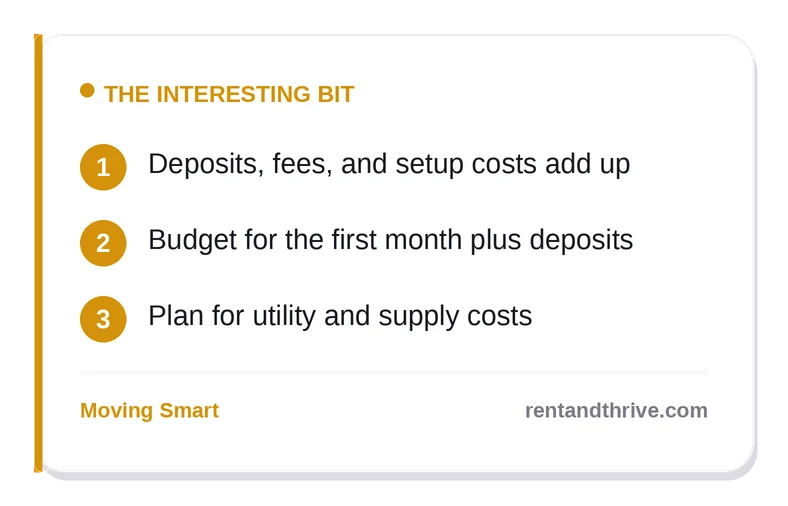
Beyond the obvious, a move often carries hidden costs: a new security deposit and first month’s rent due before you get the old deposit back, application or pet fees, utility setup or transfer charges, and the price of replacing items that do not survive the move. Time off work, cleaning costs, and meals out during the chaos add up too.
These expenses are easy to overlook precisely because they are scattered and circumstantial. Listing them out in advance turns a string of unpleasant surprises into a budget you can actually prepare for.
Budgeting for the Hidden Costs of Moving
The advertised cost of a move, the truck or the movers, is often only half the real bill, and the surprises are what bust budgets. The largest hidden cost is usually the upfront cash a new place demands: first month’s rent, last month’s rent, and a security deposit can stack into thousands due all at once, sometimes before your old deposit comes back. Plan for that overlap so you’re not caught short.
Then come the smaller line items that add up: utility setup and connection fees, a possible deposit for service, address-change and mail-forwarding costs, cleaning supplies for both the old and new units, takeout during the days your kitchen is packed, and the replacement items every move seems to require, shower curtains, trash cans, light bulbs. Build a moving budget that names each of these in advance, and add a cushion of 10 to 20 percent for the inevitable unknown. Renters who budget only for the truck are the ones who reach for a credit card mid-move; those who budget for the whole picture move without the financial hangover.
Budgeting for the Hidden Costs
The most painful squeeze is usually overlapping housing costs, paying a deposit on the new place while waiting on the old one to be returned. Building a small moving fund ahead of time, and timing the move to minimize overlap where possible, eases that crunch. Reading the new lease for every fee before signing prevents add-ons from ambushing you.
It also helps to pad the budget with a cushion for the unexpected, since something almost always comes up. Treating moving as a project with its own dedicated savings, rather than an expense you absorb on the fly, is what keeps it from derailing the rest of your finances.
Building a Buffer for the Unexpected
Because something almost always comes up during a move, padding your moving budget with a cushion prevents a surprise from becoming a crisis. An extra margin covers the forgotten fee, the replacement for a damaged item, or the meal out when the kitchen is packed, without derailing your finances.
Setting aside a dedicated moving fund ahead of time, rather than absorbing costs on the fly, keeps the whole project contained. Treating moving as its own budgeted event, complete with a buffer, is what keeps the hidden costs from spilling into the rest of your money.
Accounting for Overlapping Housing Costs
The most painful hidden cost of moving is often the overlap: paying a deposit and first month on the new place before the old deposit is returned. This squeeze can strain finances precisely when moving expenses are already high, so anticipating it, and building a small moving fund ahead of time, eases the crunch. Timing the move to minimize any overlap where possible also helps.
Because the old deposit may take weeks to come back, planning not to rely on it for the new one prevents a cash-flow gap. Treating this overlap as an expected cost, rather than a surprise, keeps it from derailing the rest of your budget.
Budgeting for Setup and Replacement Costs
Beyond the move itself, settling into a new place carries costs that are easy to overlook: utility setup or transfer fees, application or pet fees, and replacing items that do not survive the move or do not fit the new space. Cleaning costs and meals out during the chaos add up too. Listing these in advance turns a string of surprises into a budget you can prepare for.
Reading the new lease for every fee before signing prevents add-ons from ambushing you. Knowing the likely setup and replacement costs ahead of time lets you set aside enough rather than scrambling after the move.
Padding the Budget for the Unexpected
Because something almost always comes up during a move, building a cushion into your moving budget keeps a surprise from becoming a crisis. An extra margin covers the forgotten fee, the damaged item, or the unplanned expense without forcing you to dip into other savings. Treating moving as its own budgeted project, complete with a buffer, contains the cost.
Setting that money aside ahead of time, rather than absorbing costs on the fly, is what keeps the hidden expenses from spilling into the rest of your finances. A planned buffer turns the inevitable unexpected into a manageable line rather than a setback.
Reading the New Lease for Every Fee
Many of the hidden costs of moving are actually disclosed, just buried in the new lease, which is why reading it closely before signing prevents surprises. Application fees, pet rent, parking, amenity charges, and rules about deposits can all add to your real cost, and spotting them in advance lets you budget accurately. A fee you anticipate is far easier to absorb than one that ambushes you.
Asking the landlord to clarify anything unclear, and confirming exactly what is due at move-in, completes the picture. Knowing the full cost before you commit keeps the move’s hidden expenses from spilling over into the rest of your finances.
Frequently Asked Questions
What moving costs surprise people?
Deposits, application fees, utility setup, and supplies add up fast.
How much should I budget?
Plan for the first month’s rent plus deposits and setup costs.
How do I avoid surprises?
List every cost before you commit to a move.
Related reading
- Moving on a Budget: How to Cut Your Moving Costs in Half
- Utility Setup Guide: Everything to Arrange Before Moving In
- The Ultimate Moving Checklist: 8 Weeks Before Move-In Day
- How to Save Money on Rent Without Moving