Credit Builder Loans: Are They Worth It?
A credit-builder loan flips the usual loan on its head: you make payments first, and receive the money at the end. It exists specifically to build credit, but whether it is worth it comes down to the numbers.
How Credit-Builder Loans Work
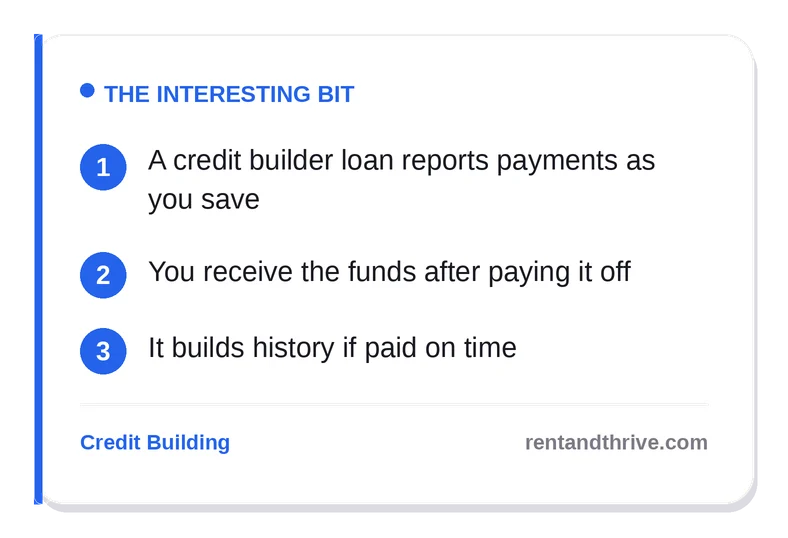
With a credit-builder loan, the lender holds the loan amount in a locked account while you make fixed monthly payments. Those payments are reported to the credit bureaus, building a record of on-time installment history, and once you finish, the funds, sometimes minus fees and interest, are released to you. In effect it is a structured way to save while establishing credit.
This design makes it accessible to people with no credit, because the lender’s risk is low. The credit benefit comes from the consistent payment record, which is one of the most important factors in any score.
Running the Numbers on a Credit-Builder Loan
A credit-builder loan flips a normal loan backward: instead of getting money up front, you make fixed monthly payments into an account you can’t access until the end, and the lender reports each on-time payment to the bureaus. When it’s over, you receive the saved funds, minus any fees or interest. For renters with no installment history, it builds two things at once, credit and a small lump of savings.
Before signing, do the math. Compare the total fees and interest against what you’ll get back; the best programs from credit unions and community lenders keep costs low. Confirm it reports to all three bureaus, or the credit benefit shrinks. Make sure the monthly payment fits your budget comfortably, because a missed payment on a product meant to help you would do real harm. Treat it as a structured savings habit with a credit bonus rather than a way to borrow. Used that way, a modest credit-builder loan can add the installment line a thin file is missing while leaving you with cash in hand.
Running the Numbers Before You Commit
The value depends on the cost. Compare any fees and the interest you will effectively pay against the benefit of the credit history and the forced savings, and confirm that the lender reports to all three major bureaus, since a loan that does not report builds nothing. A reasonable, transparent cost structure is what separates a useful product from an expensive one.
It is also worth comparing against alternatives like a secured card, which can build similar history. A credit-builder loan makes the most sense if you want an installment account, value the savings discipline, and find the total cost modest relative to that benefit, and a financial counselor can help you weigh the trade-offs.
Comparing a Credit-Builder Loan to Other Options
Before committing to a credit-builder loan, it helps to weigh it against alternatives that build similar history, such as a secured card or becoming an authorized user. Each establishes a payment record; the best choice depends on whether you want an installment account, value the forced savings, and find the costs reasonable. There is no single right answer for everyone.
Running the total cost, fees and interest, against the benefit clarifies the decision. If the price is modest and you appreciate the structured saving, a credit-builder loan can be worthwhile, but it is worth confirming it is the most efficient route for your particular goals first.
How the Locked-Savings Mechanic Works
A credit-builder loan works opposite to a normal loan: instead of receiving money upfront, you make fixed monthly payments while the lender holds the loan amount in a locked account. Those payments are reported to the bureaus, building a record of on-time installment history, and when you finish, the funds, sometimes minus fees and interest, are released to you. In effect, you are saving and building credit at the same time.
This structure keeps the lender’s risk low, which is why these loans are accessible to people with no credit history. The credit benefit comes entirely from the consistent payment record, one of the most important scoring factors.
Because the money is locked until the end, the loan also enforces a form of savings discipline, which some borrowers value as much as the credit building itself.
Confirming Reporting and Comparing Options
The value of a credit-builder loan hinges on a few details, so it pays to check them before committing. Confirm that the lender reports to all three major bureaus, since a loan that does not report builds nothing, and weigh any fees and interest against the benefit of the credit history and forced savings. A reasonable, transparent cost structure separates a useful product from an expensive one.
It is also worth comparing against alternatives like a secured card, which can build similar payment history. The right choice depends on whether you want an installment account, value the savings discipline, and find the total cost modest relative to that benefit.
Because lending products vary, a nonprofit credit counselor can help you compare options if you are unsure. Running the numbers first ensures the loan is the most efficient route for your goals.
Deciding Whether a Credit-Builder Loan Fits You
A credit-builder loan makes the most sense for someone who wants to add installment history, values the built-in savings discipline, and finds the total cost modest relative to that benefit. If you already have a healthy mix or would rather not pay any fees, an alternative like a secured card may serve you better, so the decision comes down to your specific goals.
Running the numbers, fees and interest against the value of the credit history and forced savings, clarifies whether it is worthwhile, and confirming the lender reports to all three bureaus is non-negotiable. For tailored guidance, a nonprofit credit counselor can help you weigh it against other options before you commit.
Frequently Asked Questions
What is a credit builder loan?
A loan where you make payments first and receive the funds after, building history.
Is it worth it?
It can build credit if you pay on time, but compare any fees.
Who is it for?
People starting from little or no credit history.
Related reading
- Secured Credit Cards: Are They Worth It for Credit Building?
- How to Get Approved for an Apartment With Bad Credit
- Hard vs. Soft Credit Inquiries: What Renters Need to Know
- How Long Does It Take to Build Good Credit From Scratch?