
Grocery Budget Hacks That Actually Work for Renters
Groceries are one of the most flexible lines in a renter’s budget, which makes them a prime target for painless savings. The trick is a strategy that fits a small kitchen and a busy schedule, not a coupon obsession.
Planning Around a Small Kitchen and Limited Storage
Many renters cook in compact kitchens with little pantry or freezer space, which changes the math on bulk buying. Stocking up only on shelf-stable staples you genuinely use, while buying perishables in smaller, realistic quantities, cuts the waste that quietly inflates a grocery bill. Food you throw away is the most expensive food there is.
A loose weekly plan built around a handful of versatile ingredients keeps both spending and spoilage down. Planning meals that share components, so a single purchase stretches across several dishes, is especially effective when storage is tight.
A Renter's Small-Kitchen Grocery Strategy
Grocery savings for renters run into a constraint homeowners rarely face: limited storage and a small freezer. Buying in bulk to save per unit backfires if the food spoils or there’s nowhere to put it. The workaround is to bulk-buy only shelf-stable staples, rice, beans, pasta, canned goods, and shop fresh items in smaller, more frequent trips planned around what you’ll actually cook that week.
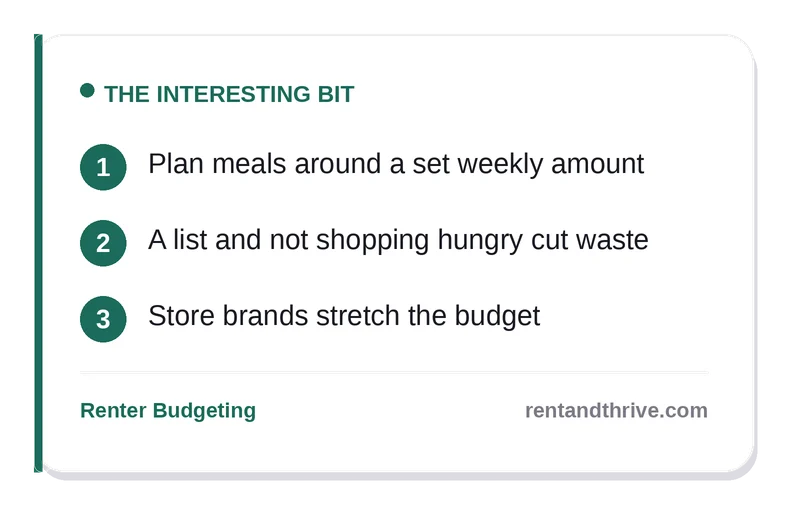
Build the week’s meals around a few overlapping ingredients so nothing rots in the back of the fridge: a rotisserie chicken becomes dinner, then lunch, then stock. Check unit prices rather than sticker prices, lean on store brands, which are frequently the same product as name brands, and never shop hungry, since impulse buys are where budgets quietly bleed. A flexible list beats a rigid one: write down the meals and core ingredients, but leave room to swap in whatever’s marked down that day. Small, deliberate trips consistently beat one big chaotic haul.
Simple Habits That Lower the Weekly Bill
Shopping with a list and a rough budget in mind reduces impulse buys, and a quick check of what you already have prevents accidental duplicates. Store brands are often nearly identical to name brands at a lower price, and comparing unit prices rather than sticker prices reveals the real value. These small habits compound over a year into meaningful savings.
Cooking at home most of the time remains the biggest lever, since prepared and delivered food carries a steep markup. Even a few home-cooked meals replacing takeout each week can free up money for other goals without any sense of deprivation.
Cutting Food Waste to Stretch the Budget
Food that gets thrown away is money thrown away, so reducing waste is one of the most direct grocery savings. Storing perishables properly, planning to use the most spoilage-prone items first, and repurposing leftovers all stretch a single shopping trip further. A little attention to what is already in the fridge prevents buying what you do not need.
Freezing extras before they spoil and keeping a rough inventory so nothing gets lost in the back of the pantry add up over time. For a renter watching every category, trimming waste lowers the bill without requiring any sacrifice in what you actually eat.
Meal Planning That Keeps the Bill Down
A loose meal plan is one of the most reliable ways to control a grocery budget, because it turns shopping from improvisation into a list. Planning a handful of meals around ingredients that overlap means a single purchase stretches across several dishes, which reduces both spending and the waste that comes from buying things you never use. It also cuts down on impulse takeout when you already know what is for dinner.
The plan does not need to be rigid; even roughly mapping a few dinners and keeping flexible staples on hand provides most of the benefit. Building meals around what is affordable and in season, rather than a fixed wish list, keeps the plan both economical and realistic for a busy week.
Smart Shopping Habits That Add Up
Several small habits compound into meaningful grocery savings over a year. Comparing unit prices rather than sticker prices reveals the real value, store brands are often nearly identical to name brands for less, and shopping with a list reduces impulse buys. Checking what you already have before you shop prevents the accidental duplicates that quietly inflate the bill.
Buying shelf-stable staples you genuinely use when they are on sale, while keeping perishables to realistic quantities, balances savings against waste. None of these tactics requires extreme couponing or much extra time, which is exactly why they tend to stick and steadily lower what you spend on food.
Cooking at Home as the Biggest Lever
For most renters, cooking at home rather than ordering out is the single largest grocery-related saving, since prepared and delivered food carries a steep markup. Even replacing a few takeout meals a week with simple home cooking can free up a meaningful amount over a month, without requiring elaborate recipes or much extra time. Batch-cooking and using leftovers stretch that effort further.
The trick is making home cooking realistic for a busy schedule, which means keeping a few easy, repeatable meals in rotation rather than aiming for variety every night. Building the habit around convenience, quick meals you will actually make, captures the savings sustainably instead of through occasional bursts of ambitious cooking.
Building Habits That Stick
The grocery strategies that save the most are the ones you can keep up without much thought, so building a few simple habits matters more than occasional bursts of effort. Shopping with a list, comparing unit prices, leaning on store brands, and planning meals around what you already have each become second nature with a little repetition. Sustainability is what turns small savings into meaningful ones over a year.
Focusing on the habits that fit your routine, rather than extreme couponing, keeps the approach realistic. A handful of consistent practices, applied week after week, lowers the grocery bill far more reliably than any one-time tactic.
Frequently Asked Questions
How do I cut my grocery budget?
Plan meals around a set amount, shop with a list, and avoid shopping hungry.
Do store brands really help?
Yes, they often cost less for similar quality.
How do I avoid waste?
Plan meals and buy only what you will use.
Related reading
- The 50/30/20 Budget Rule: Does It Actually Work for Renters?
- Renters Insurance Explained: What It Covers and How Much You Actually Need
- How to Invest $100 a Month as a Renter and Actually Build Wealth
- Emergency Fund vs. Investing: Which Should Renters Prioritize?