
Emergency Fund for Renters: How Much Do You Really Need?
An emergency fund is the buffer that keeps a surprise expense from becoming a debt spiral. For renters, the right size depends less on a magic number and more on how stable your income and housing are.
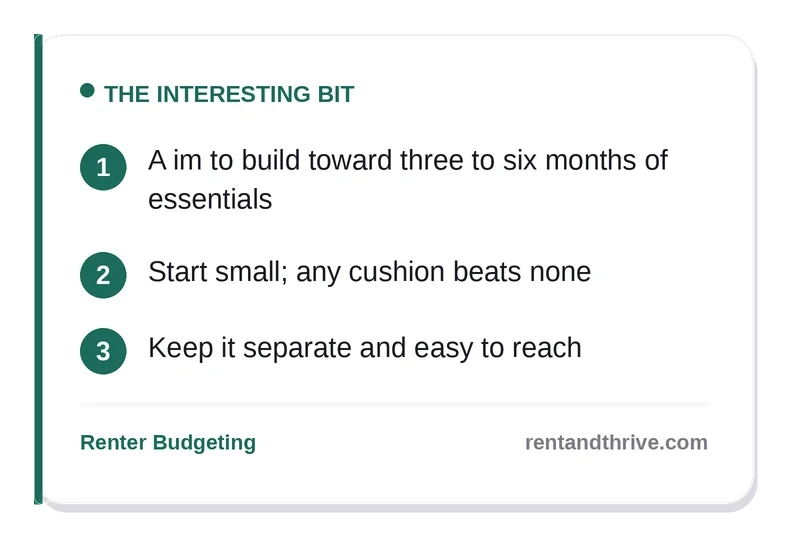
How Much Renters Realistically Need
A widely cited guideline is three to six months of essential expenses, but that range is a starting point, not a verdict. Renters with steady jobs and modest fixed costs may feel secure on the lower end, while those with variable income, no backup support, or a lease that could end abruptly often sleep better closer to the higher end.
It can help to calculate the figure from your essential monthly costs, rent, utilities, food, transportation, and insurance, rather than your total spending. The aim is to cover what you genuinely must pay if income paused, not to replace your entire lifestyle.
Where Renters Should Actually Keep Their Emergency Fund
For renters, the right size of an emergency fund hinges on one question: how fast could you cover a sudden move? Beyond the standard three-to-six months of essentials, factor in a hidden renter risk, the possibility that a lease ends, a building sells, or a landlord declines to renew, forcing first month, last month, and a fresh deposit all at once. That can be several thousand dollars on short notice, so the upper end of the range is wise.
Keep the money separate from checking but reachable within a day or two: a high-yield savings account at an online bank is ideal, earning interest while staying liquid. Avoid tying it up in investments that can drop right when you need cash. Name the account something like Do Not Touch so it feels off-limits for everyday temptations. Rebuild it immediately after any withdrawal; an emergency fund is a tool you refill, not a one-time achievement.
Building the Fund Without Stalling Everything Else
If starting from zero, a first milestone of a few hundred to one thousand dollars can absorb the most common shocks, a car repair, a medical bill, a flight home, without touching a credit card. Reaching that initial cushion quickly tends to be more motivating than staring at a distant six-month goal.
Automating a modest transfer on payday is usually the most reliable way to grow the fund, because money moved before you see it is money you rarely miss. Many renters balance this against other priorities, contributing steadily rather than pausing all other goals, and a financial professional can help if you are weighing it against high-interest debt.
Replenishing the Fund After You Use It
An emergency fund is meant to be spent when a true emergency hits, and using it is a success, not a failure. The important step is rebuilding it afterward, treating replenishment as a temporary top priority until the cushion is restored. Folding a recovery contribution back into the budget keeps a single emergency from leaving you exposed to the next one.
It also helps to revisit the target amount periodically, since rising rent or changing circumstances can mean the old number no longer covers a few months of essentials. A fund sized to your current life is the one that actually protects you.
Knowing What Actually Counts as an Emergency
An emergency fund only works if it is reserved for true emergencies, which means defining what qualifies before you are tempted to dip in. Genuine emergencies are urgent, necessary, and unexpected, a job loss, an essential car or home repair, an unplanned medical bill, not a sale, a vacation, or a want that simply feels pressing in the moment. Keeping that line clear is what ensures the money is there when you really need it.
For costs that are predictable but occasional, like routine car maintenance or an annual fee, a separate savings bucket is a better fit than the emergency fund. Reserving the emergency fund strictly for the truly unforeseen keeps it from being slowly drained by expenses you could have planned for.
Setting Milestones From Starter Fund to Full Cushion
Building an emergency fund feels less daunting when broken into milestones rather than viewed as one large target. A common first milestone is a small starter amount that can absorb the most frequent shocks without resorting to debt, which provides quick reassurance and momentum. From there, the goal gradually expands toward covering several months of essential expenses.
The right full size depends on your circumstances, steadier income and lower fixed costs may justify the lower end of typical guidance, while less stable situations warrant more. Reaching each milestone in turn, and automating contributions along the way, turns a long-term goal into a series of achievable steps rather than an all-or-nothing effort.
Keeping the Fund Accessible but Not Too Accessible
An emergency fund needs to be reachable quickly but not so convenient that it gets spent on non-emergencies. Many renters keep it in a separate savings account, often one that earns some interest while still allowing fast access, which creates just enough friction to discourage casual withdrawals. The point is to have the money available within a day or two when a real emergency hits, without it sitting in your everyday checking where it blends into spending.
Avoiding accounts that lock the money away or carry penalties for access is wise, since an emergency by definition cannot wait. Balancing accessibility against separation, easy to reach but kept apart from daily spending, is what makes an emergency fund both usable and durable.
Frequently Asked Questions
How much should a renter’s emergency fund be?
Many aim for three to six months of essential expenses, but any cushion helps.
Where should I keep it?
In a separate, easily accessible account so it is there when you need it.
What if I cannot save that much yet?
Start small; even a few hundred dollars prevents many debt situations.
Related reading
- Renters Insurance Explained: What It Covers and How Much You Actually Need
- Emergency Fund vs. Investing: Which Should Renters Prioritize?
- Eviction Process Explained: What Renters Need to Know
- Hard vs. Soft Credit Inquiries: What Renters Need to Know